There are so many day trips that a person can take here in the Santa Marta region, including to a couple of national parks, as well as waterfalls in the mountains, remote beaches, etc. However, when you have 3 1/2 days to rest your weary mind, to take a full day for a tour to a remote beach, when we have a beautiful beach and pool here at the hotel, seems a bit unnecessary. So, we decided to park ourselves for the morning by the pool and then to take the afternoon to explore the historic aspects of Santa Marta. It proved to be a great recipe for a very enjoyable day!
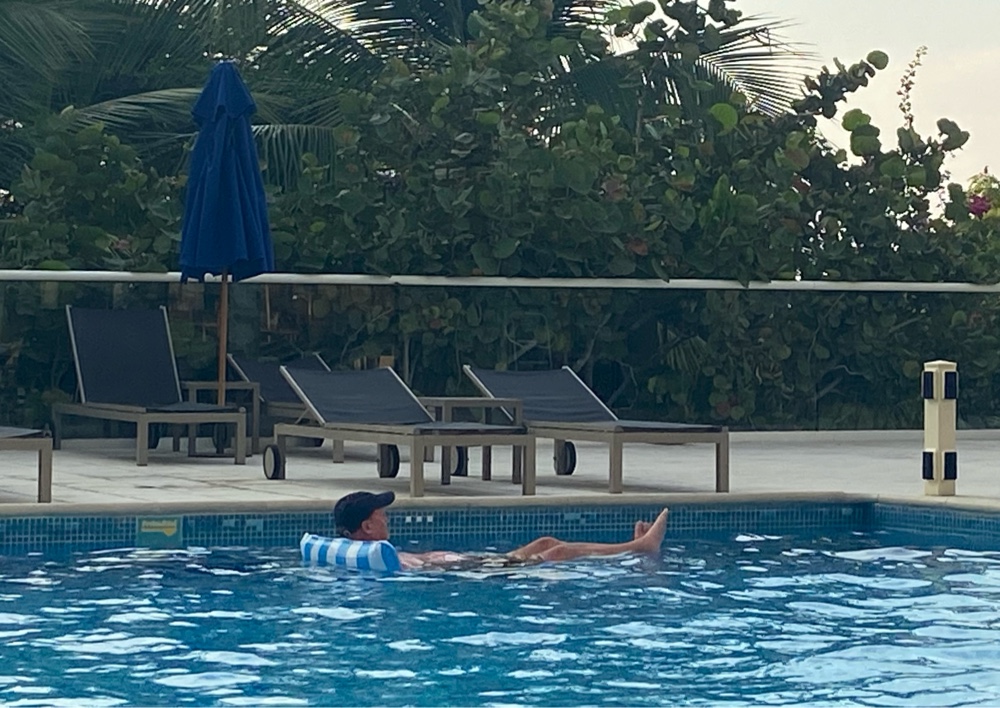
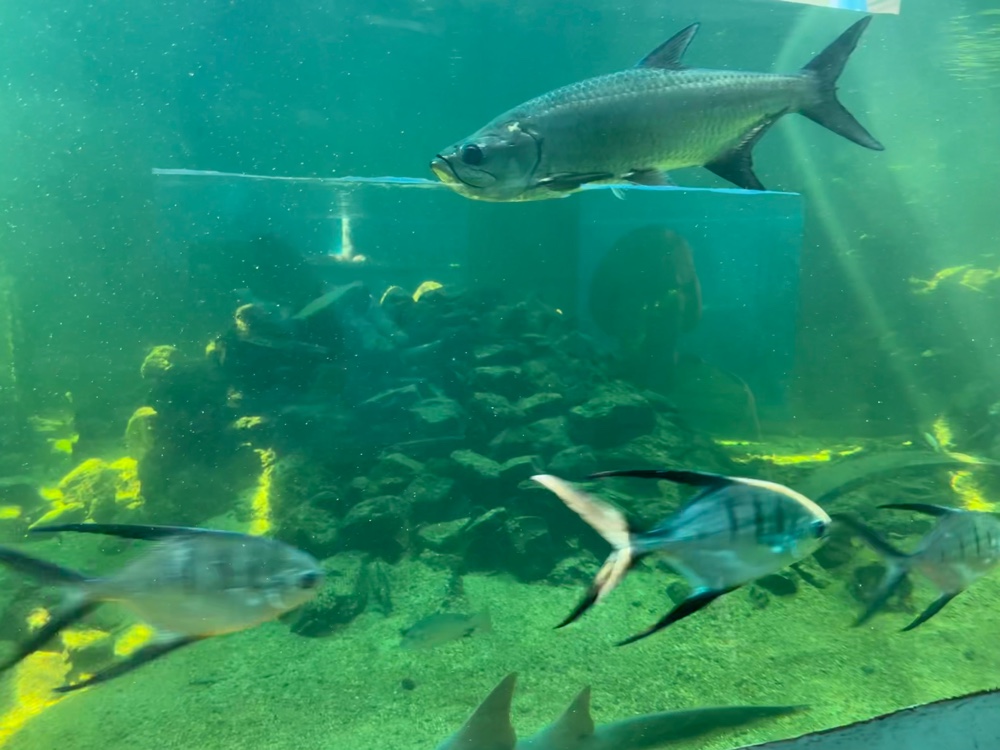
Up at 6:30AM, finished with the hotel’s wonderful breakfast buffet by 8:30, and by the pool at 9:00 when the pool opened, we floated around on our inflatable devices for much of the morning and called it quits at noon sharp. At 12:30, we took an Uber to the hotel zone, where there is a small and sort of kitschy aquarium. If you’re eight years old, it would really have a wow factor! But, at age 59, the wow factor was a little less. Still, it was fun to see.
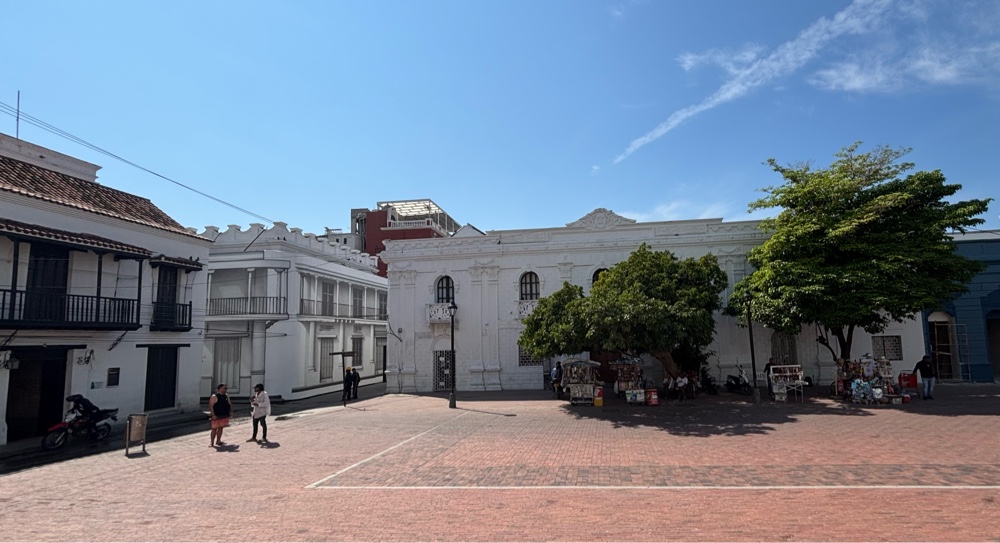
After the aquarium yeah, we jumped in another Uber to the historic centre of Santa Marta, where we picked up an efficiently organized walking tour of the main historical sites created for us by ChatGPT. (AI is a scary thing, yes, but it is incredibly useful in terms of creating tours of cities!) We took in all the major sites, including the gold museum at the historic Customs House, and ended our time in Santa Marta with ice cream along the city’s famous pedestrian zone before starting the 30-minute Uber ride back to the hotel, arriving there at 4 PM. Sunset here is at 5:30 PM, so we were able to squeeze in one more hour by the pool.
The hotel had advertised a Caribbean buffet for tonight, with live salsa music. Having had a big buffet for breakfast, and with the promise of another big buffet for supper, we had nothing to eat between 8:30 AM and 7 PM, except for that ice cream! The buffet was excellent; however, the salsa performers did not show up. We were quite disappointed. The hotel gave us a 10% discount on the whole evening. Not very impressed by that, but oh well, the food was delicious.
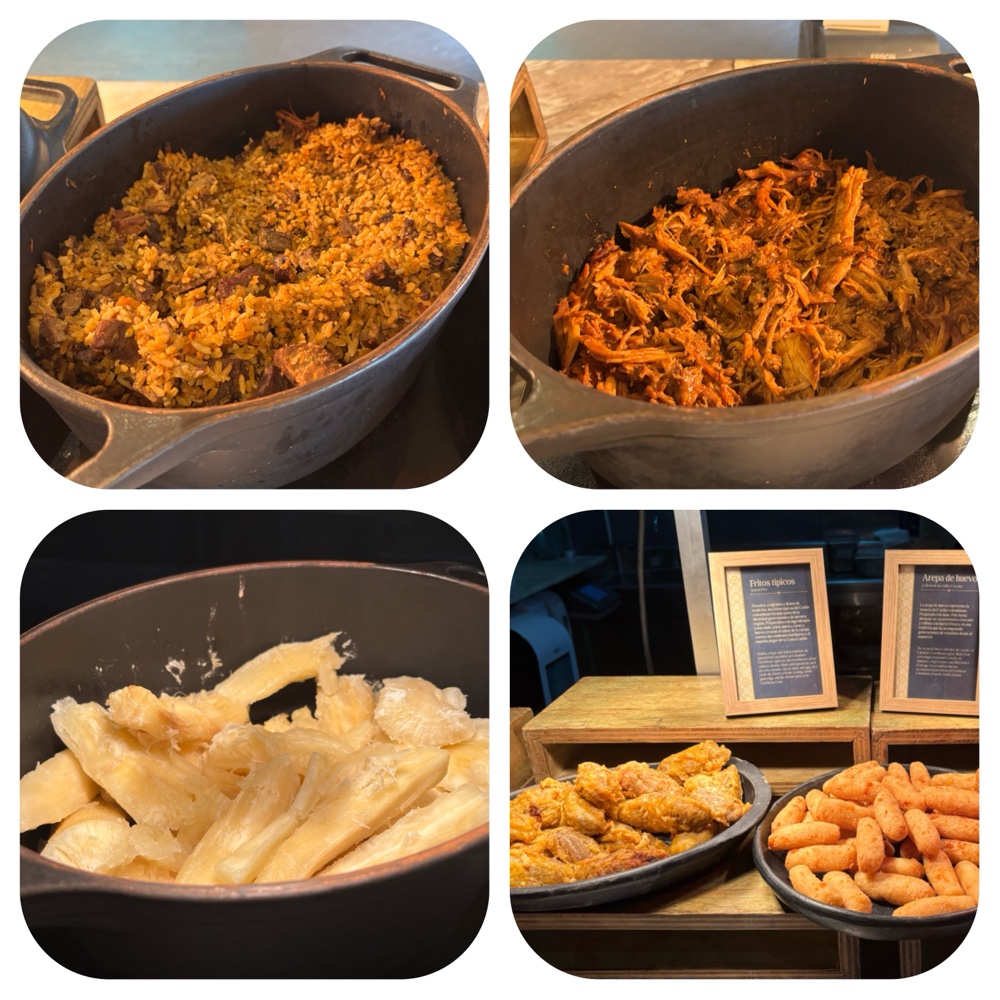 |
| Some local Colombian specialties from the breakfast buffet: beef with rice, pulled pork, yuca, and fried cheese and banana. |
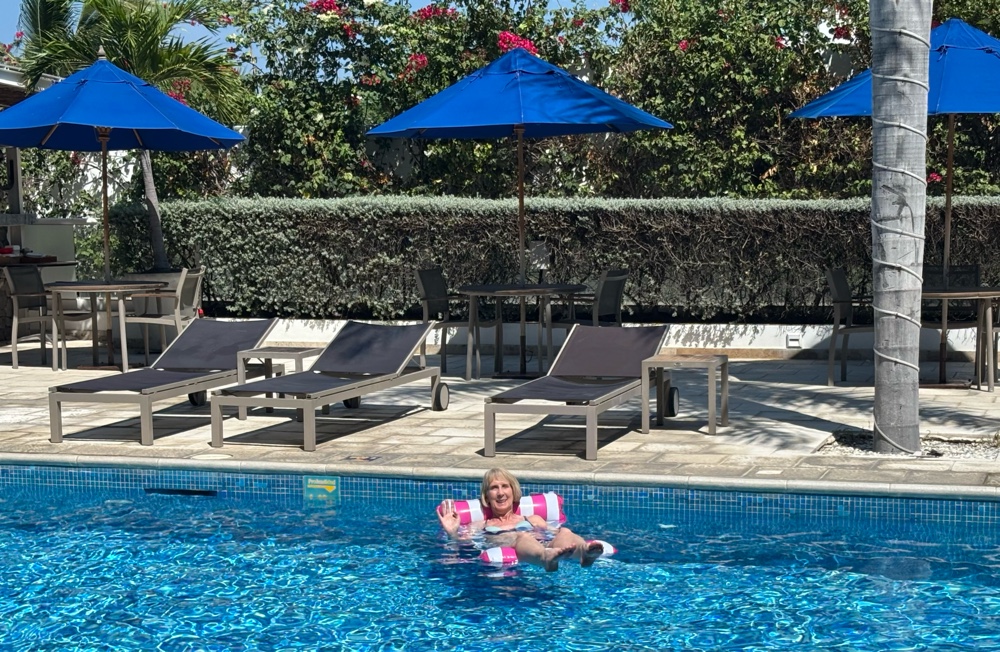 |
| Floating the morning away on our inflatable lounge chairs from Amazon. |
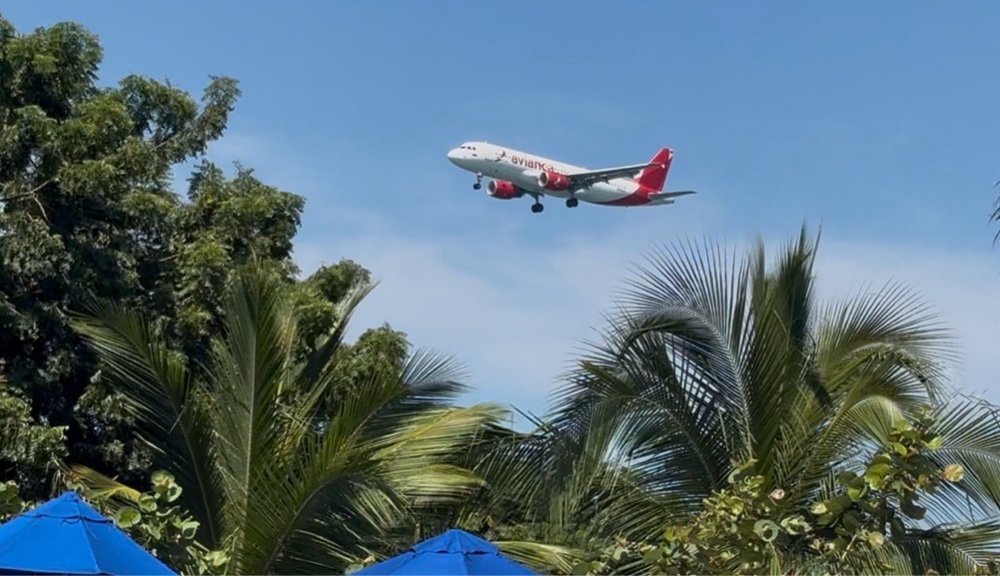 |
| Yesterday, the airplanes were taking off over the hotel. Today’s change in wind direction meant they were coming in for landing over the hotel. |
Marine World at Rodadero Beach
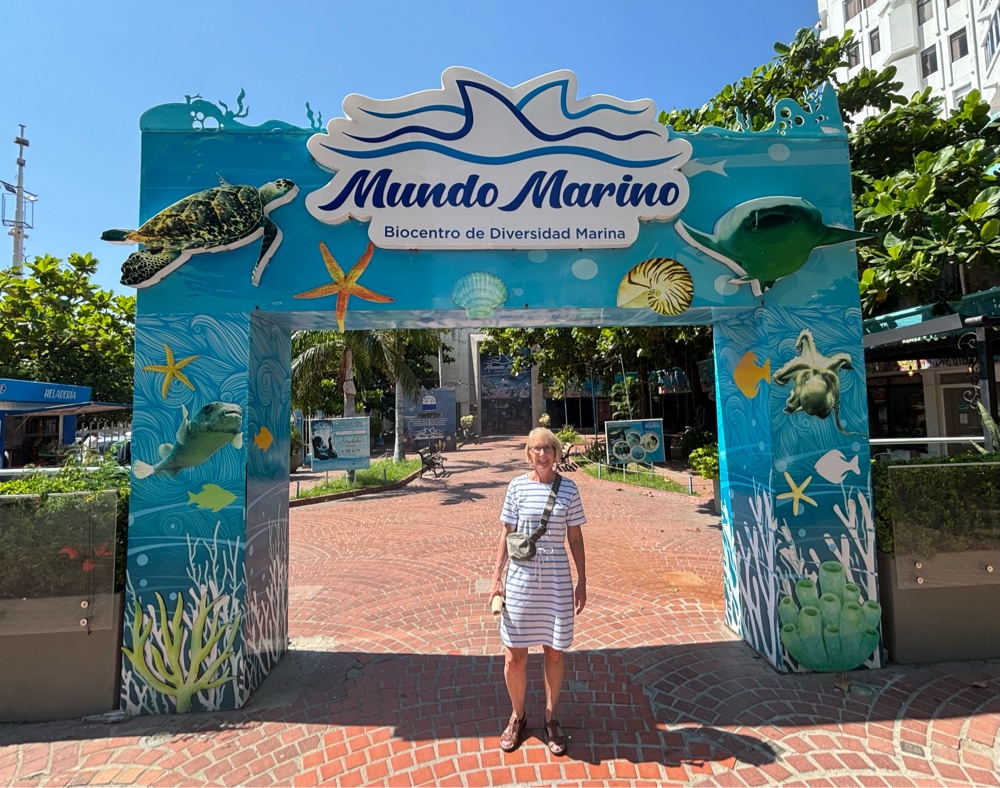 |
| The Marine World welcome sign held great Promise for the aquarium inside the gates. Let’s just say, it was a little underwhelming. |
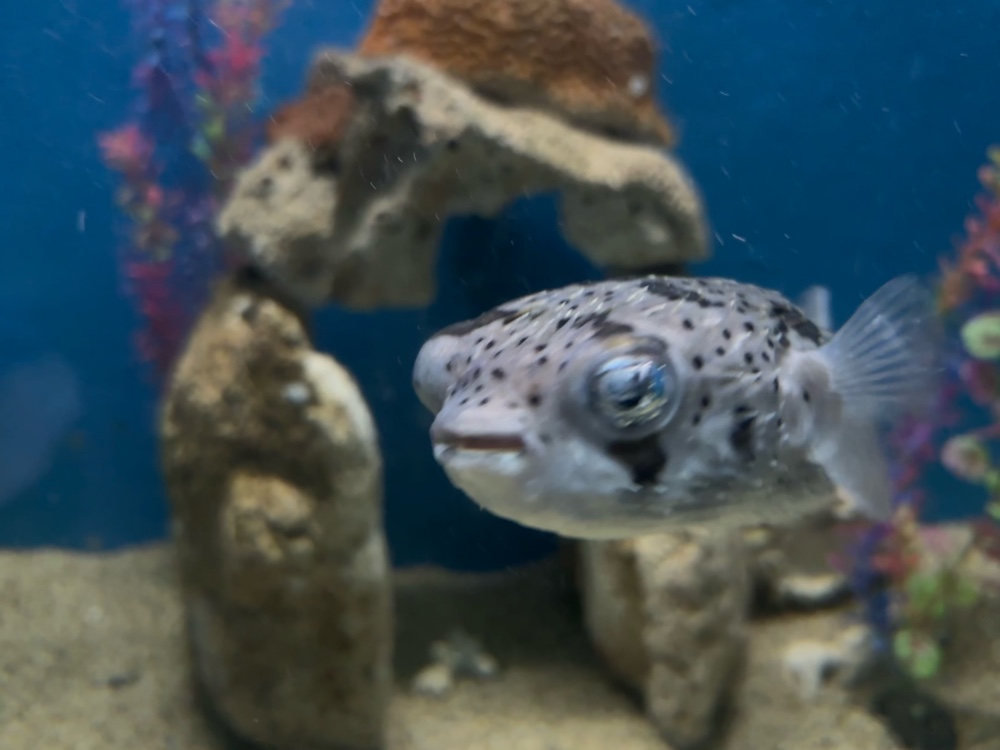 |
| There were some definite highlights, including these puffer fish. |
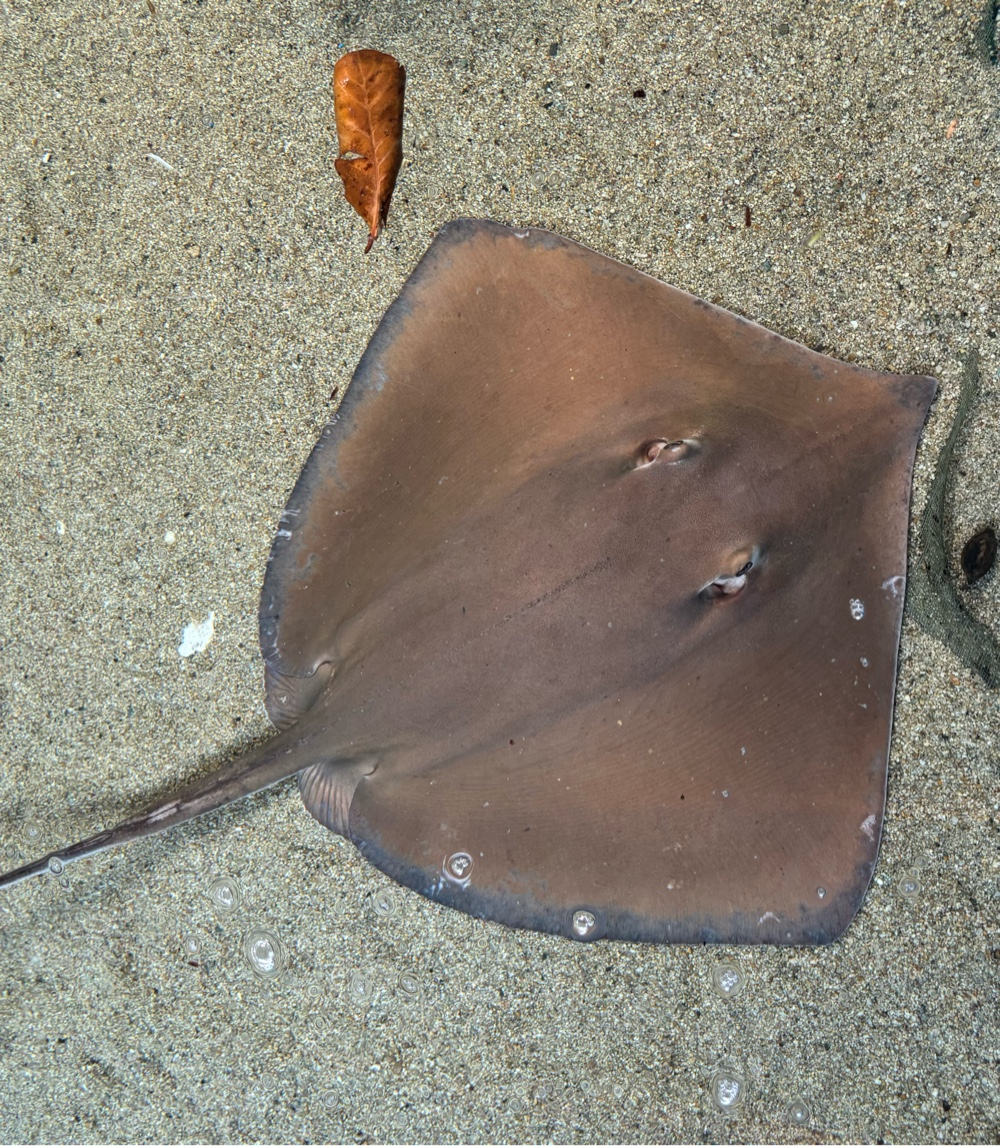 |
| The aquarium also had a great pool of stingrays. |
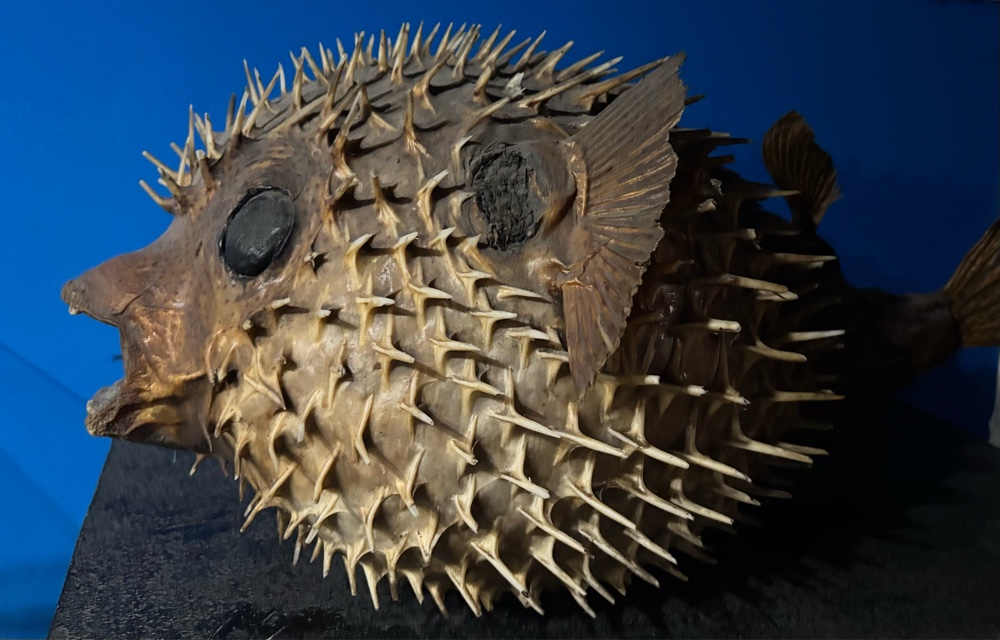 |
| This is a preserved specimen of a blowfish. Costa Rica has incredibly venomous tiny frogs. Next to those frogs, the blowfish is the world’s most venomous creature. Surprisingly, it is a delicacy in Japanese cooking. But if not prepared correctly, the dish can kill the eater quickly. |
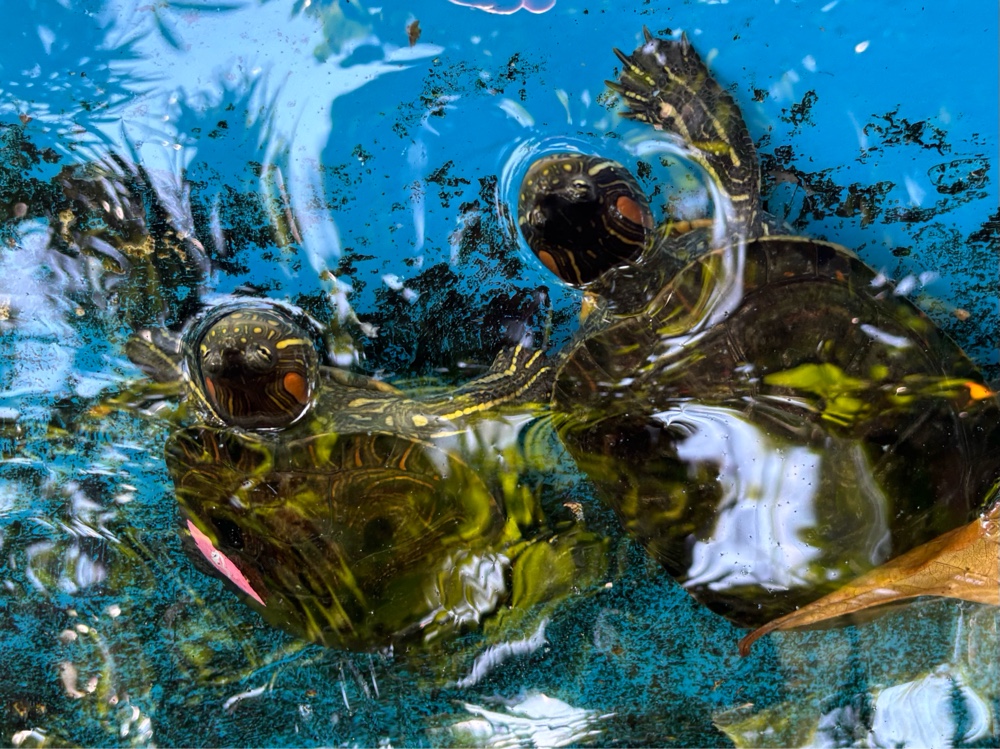 |
| The photo sort of resembles an impressionistic painting by Claude Monáe. However, it is actually two turtles coming to the surface of the water. |
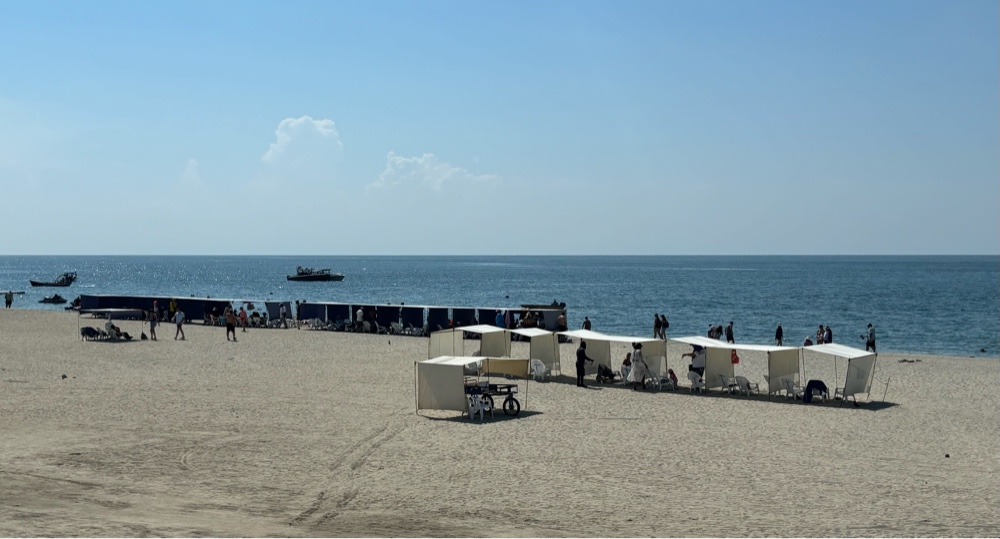 |
| Yesterday, we walked Bello Horizonte beach, which is a crowded hotel zone. North of that beach, and just south of the city of Santa Marta, is the other crowded hotel zone of the region: Playa Rodadero. Above you can see another example of the efficient beach cabanas that are typical in this area. |
Historic Santa Marta
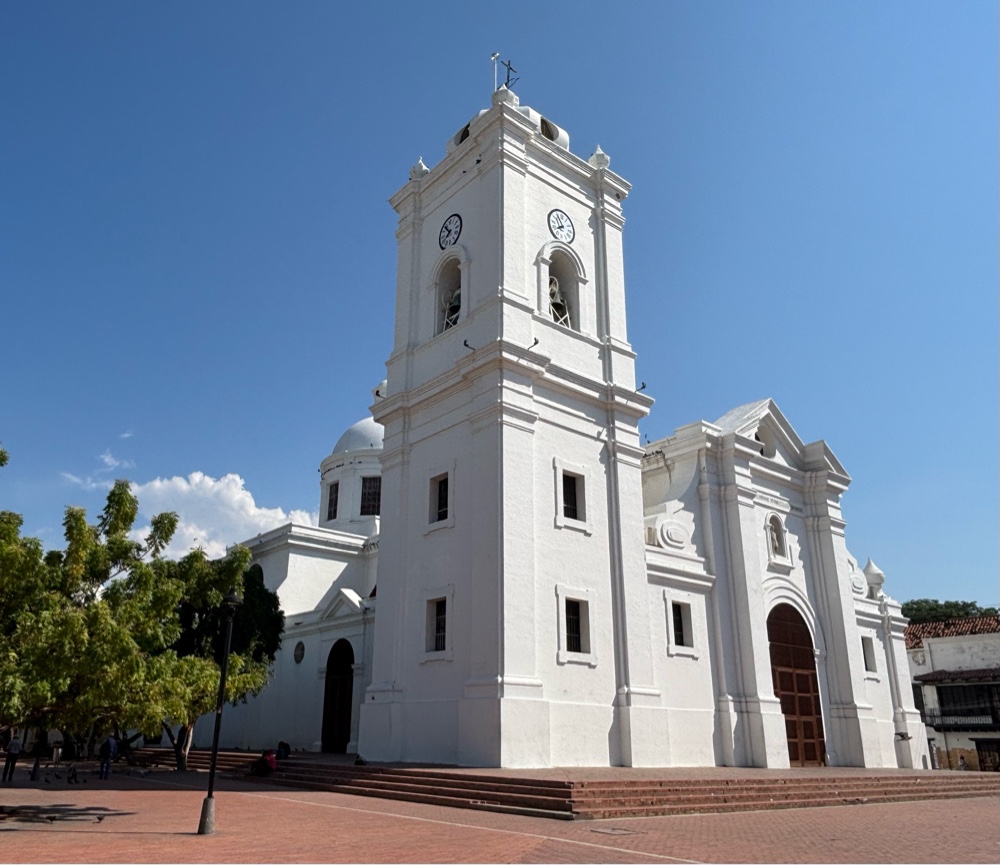 |
| The Cathedral Basilica of Santa Marta. |
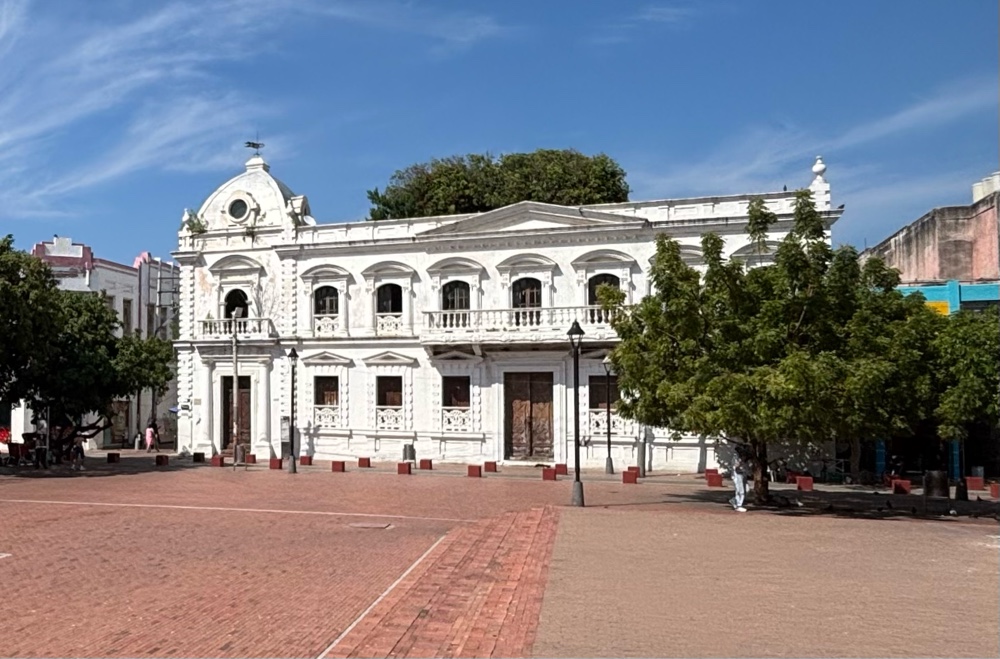 |
| Republican style building built in 1914. |
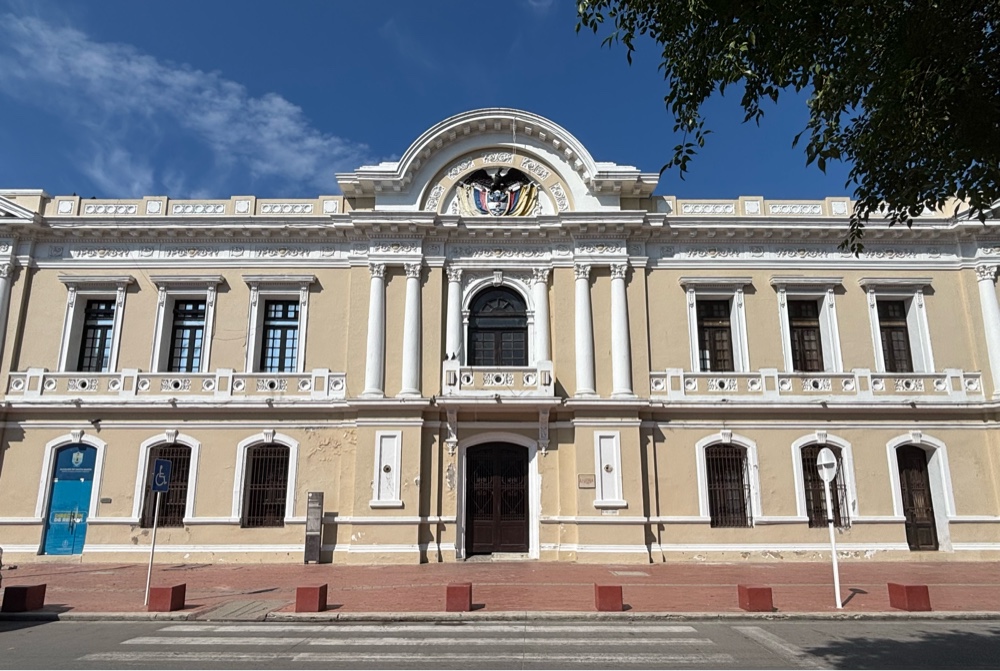 |
| Built as a house in 1730 by two brothers, who were traders. |
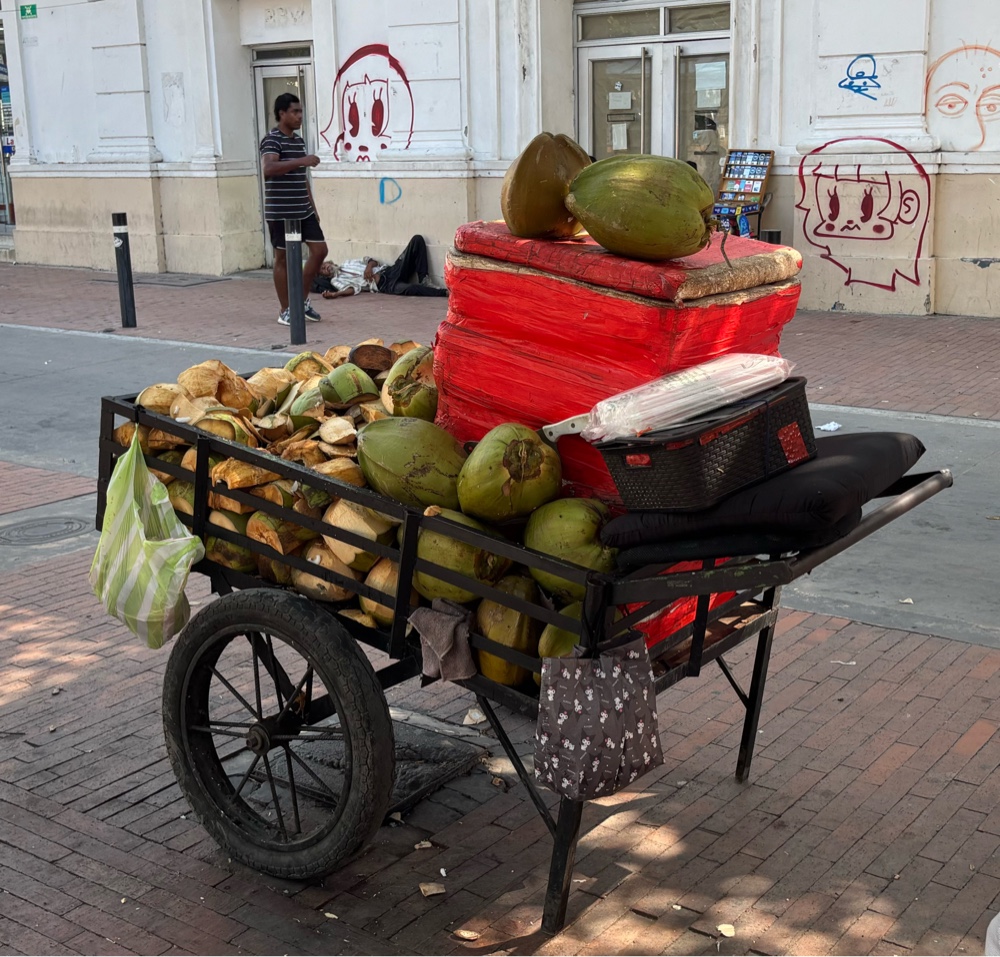 |
| Coconut vendor in the centre of Santa Marta. |
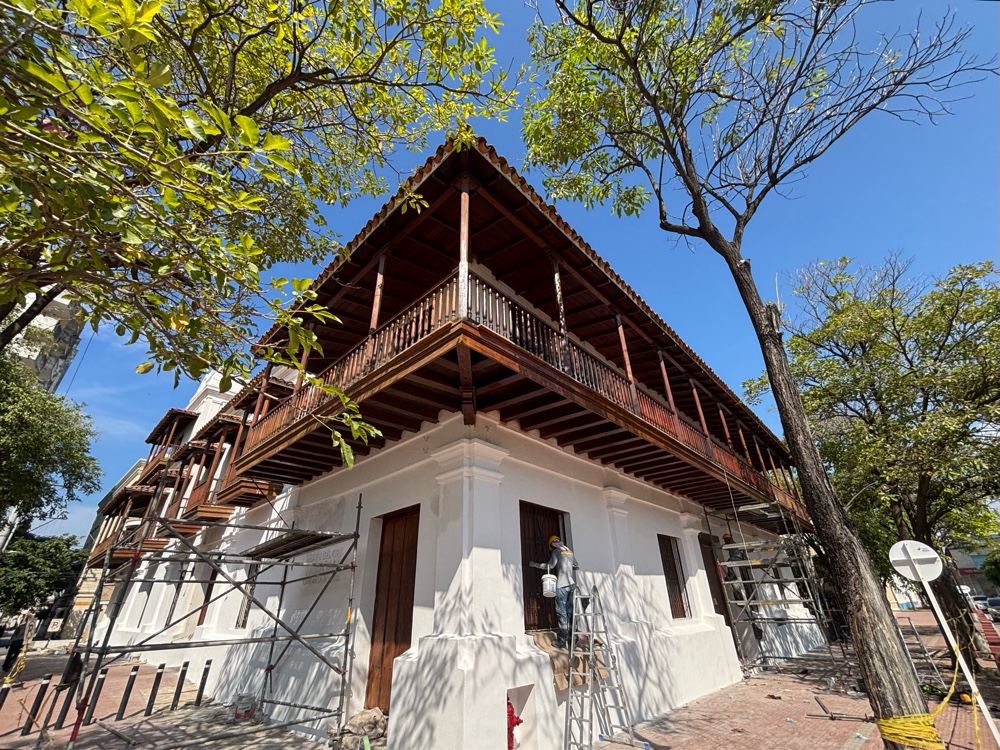 |
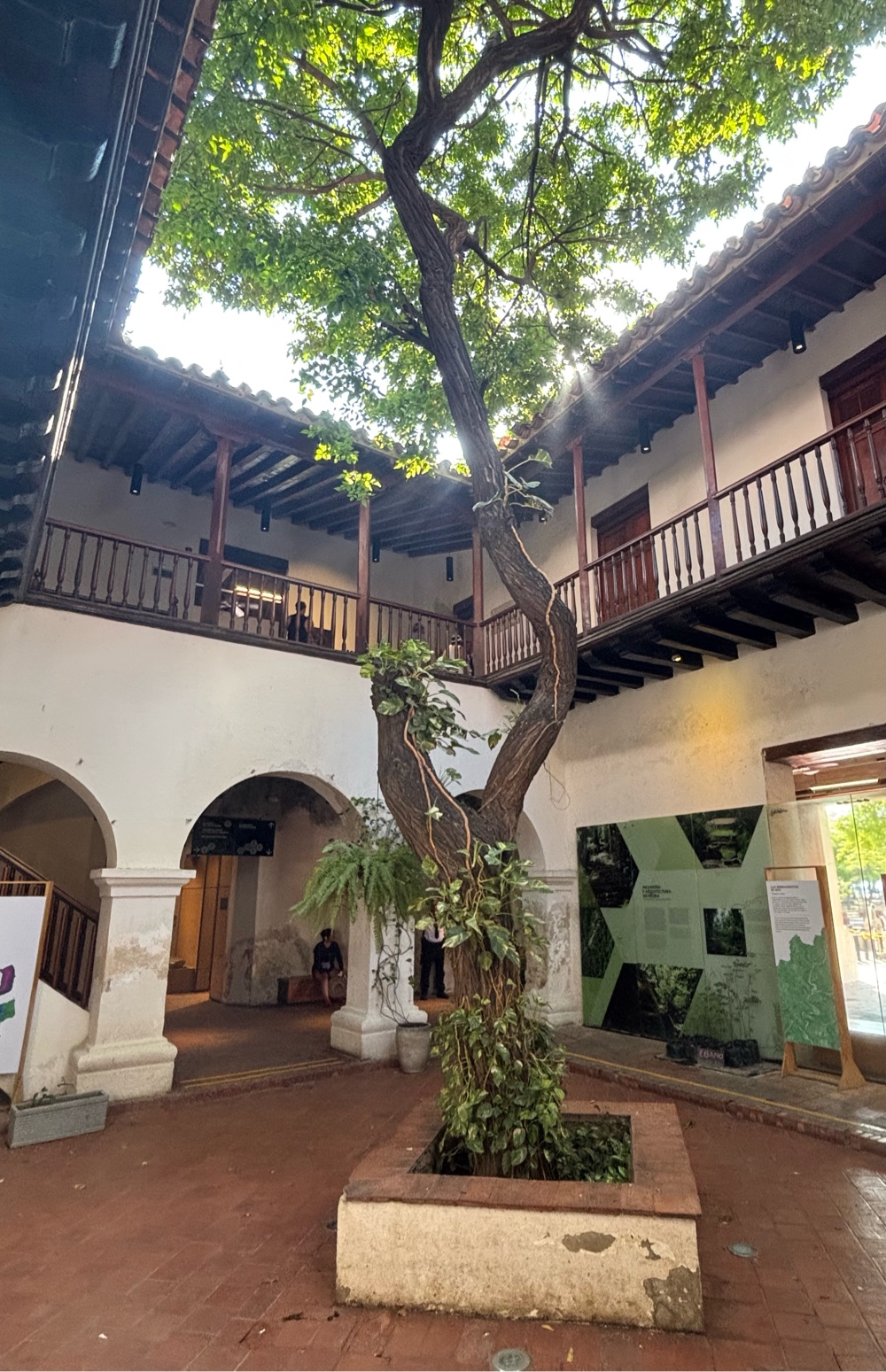
| Casa de la Aduana (Customs House) is the most beautiful and famous of Santa Marta’s historic structures. It houses the city’s gold museum. |
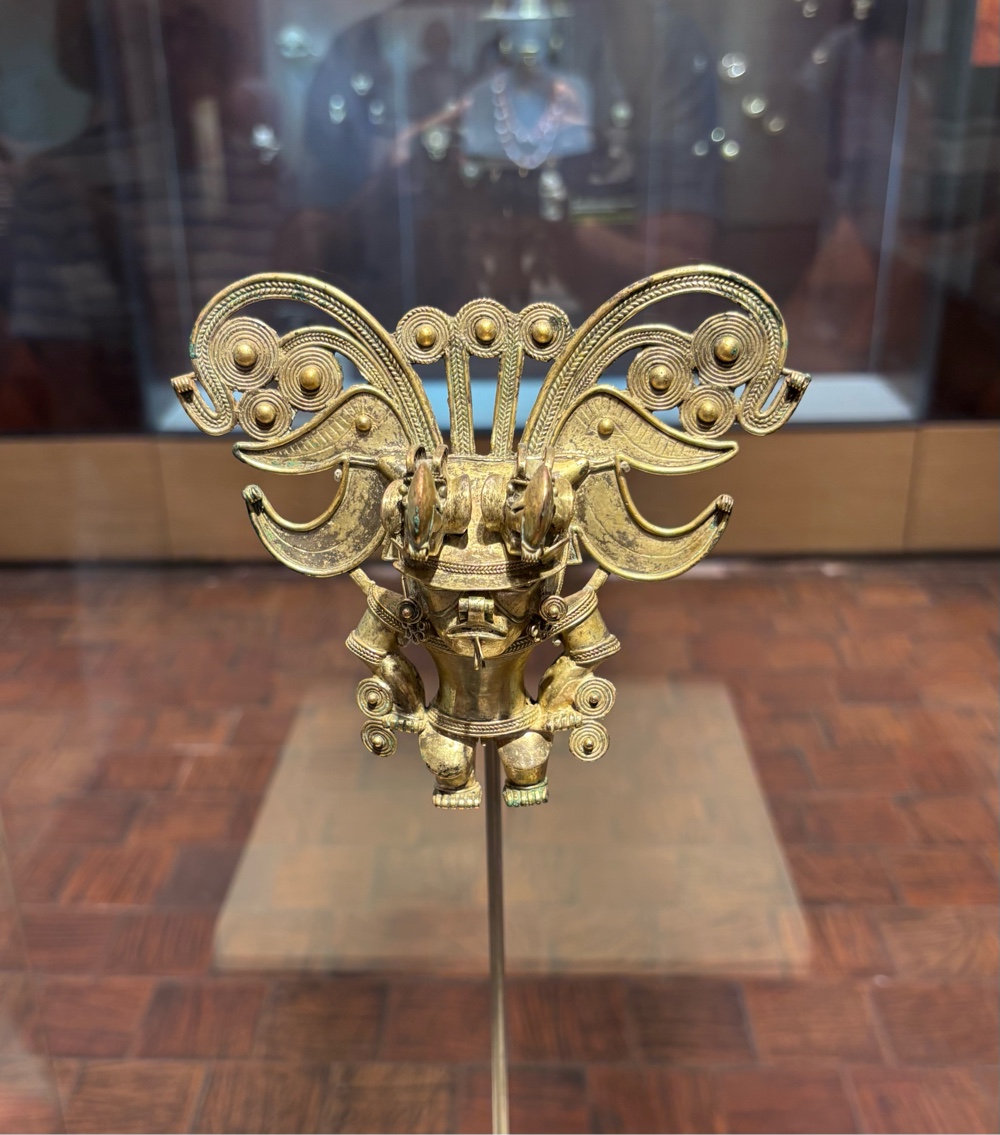
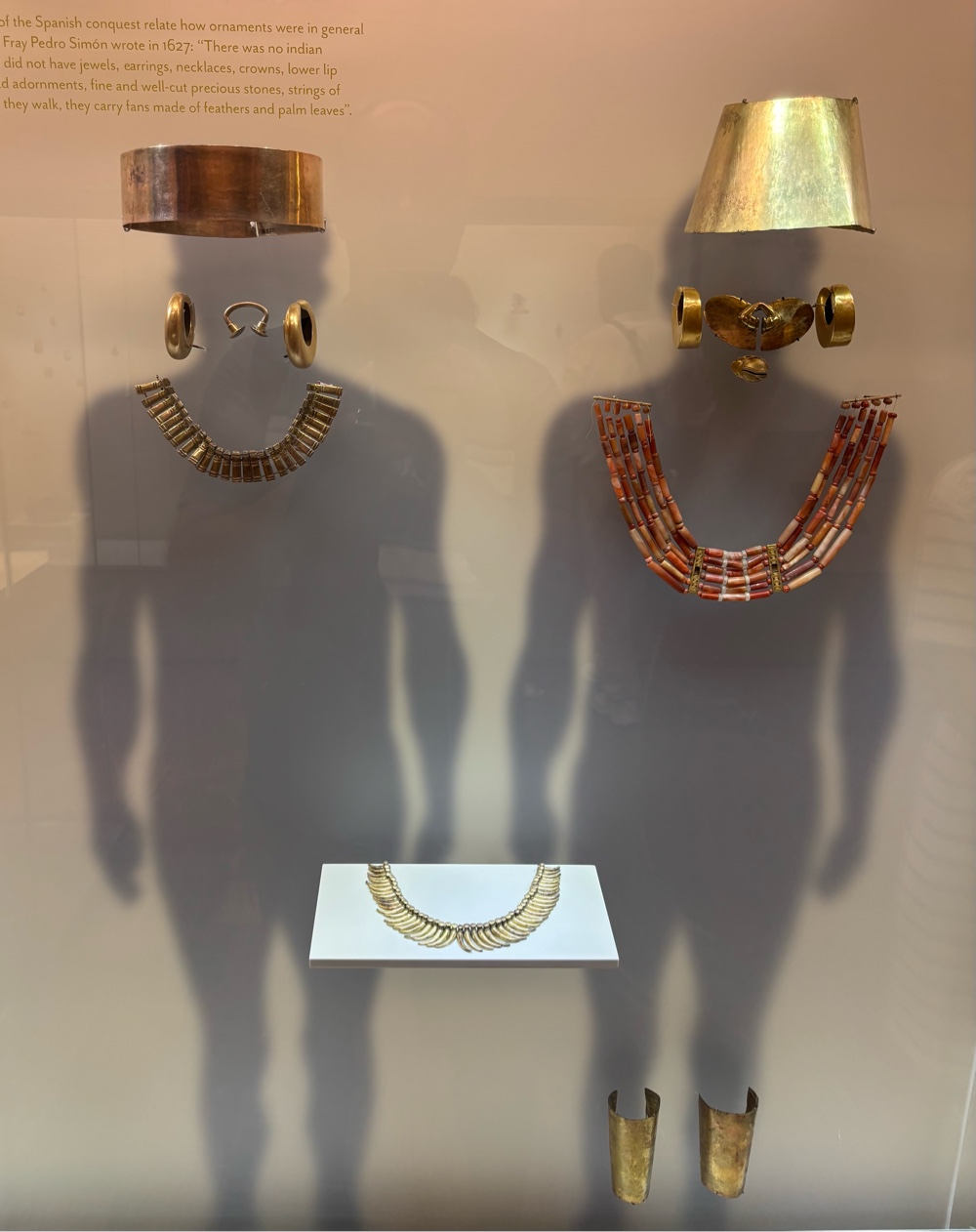
The Gold Museum has amazing artefacts from the area from both the
Nahuange Period (200 AD to 900 AD) and the Tairona Period (900 AD to 1600 AD). During these periods, the indigenous Colombians were experimenting with different metals, including gold, copper, and bronze.
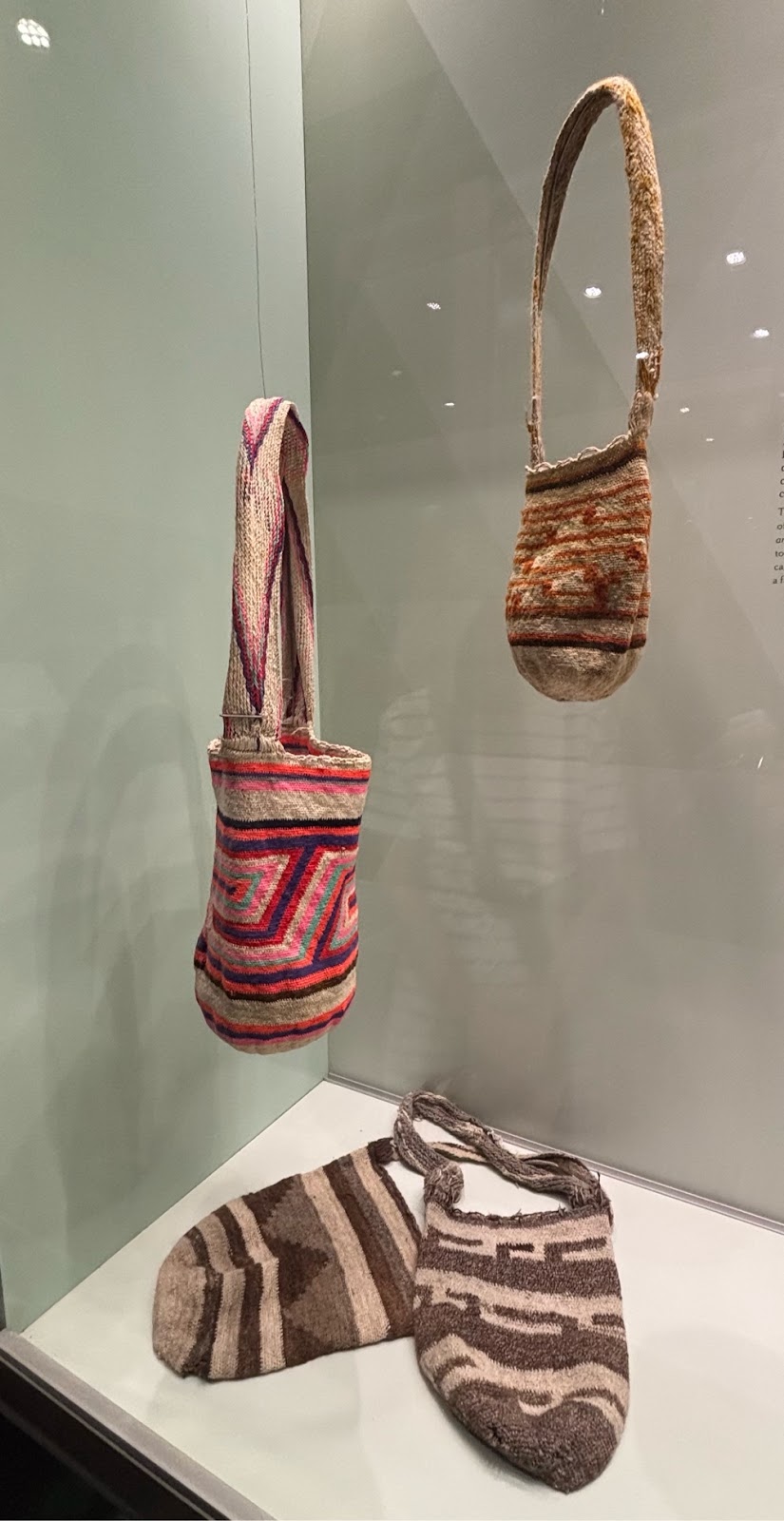 |
| If you want a high-end handmade item from this area, you will likely end up buying one of these bags: they are finally woven shoulder sacks that were used for picking cocoa leaves. A handmade one will easily set you back $200-$300. |
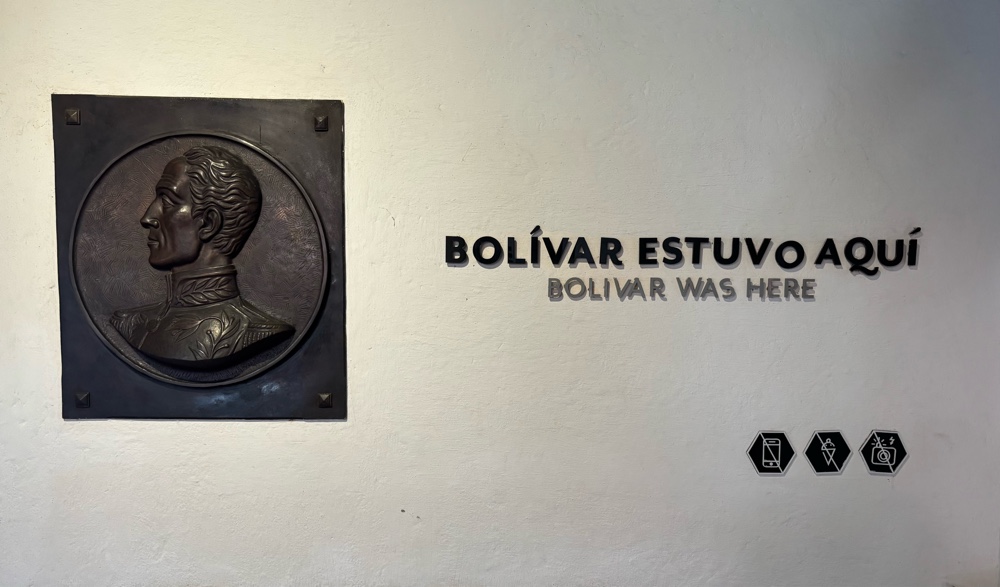 |
| Simon Bolivar (see explanation a-bit below) lay in state in the customs house for a while after he passed away |
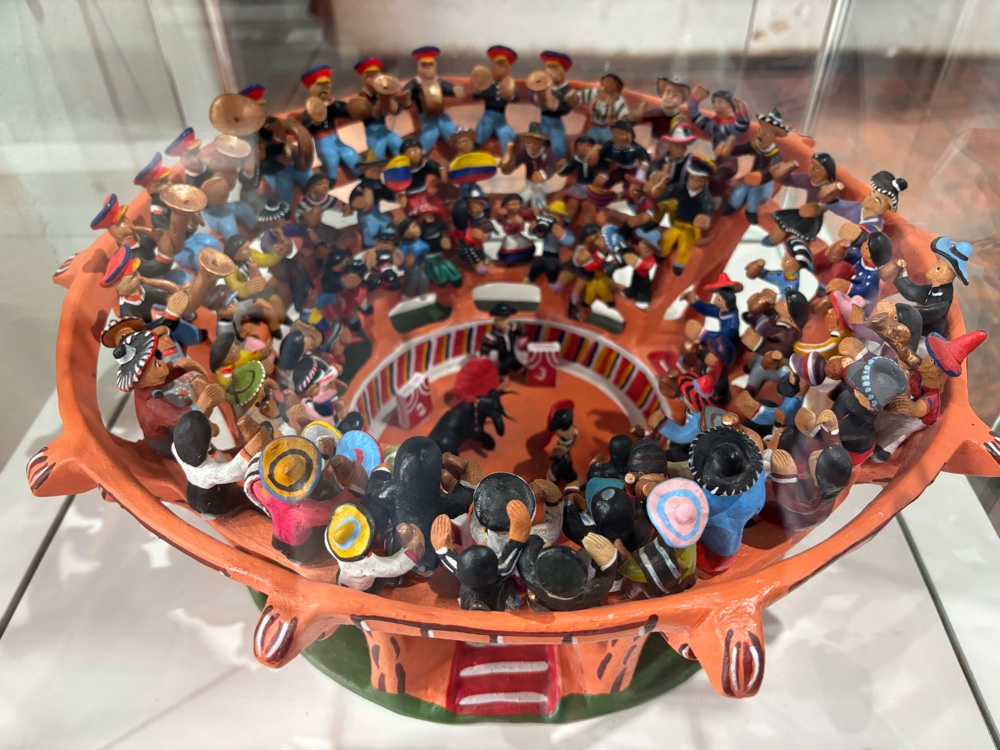 |
| This has to be one of the most unique handmade things I have ever seen: it is a bowl, fighting arena with painstakingly created spectators, bull fighter, and, of course, bull. |
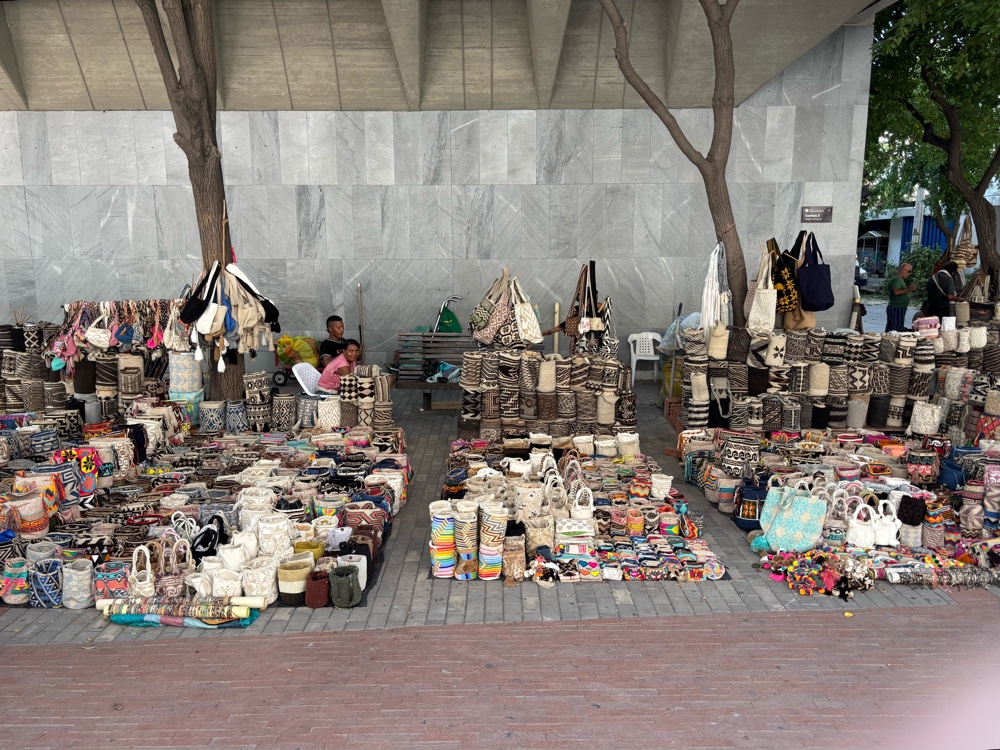 |
| A display of the typical handicrafts one will find here. |
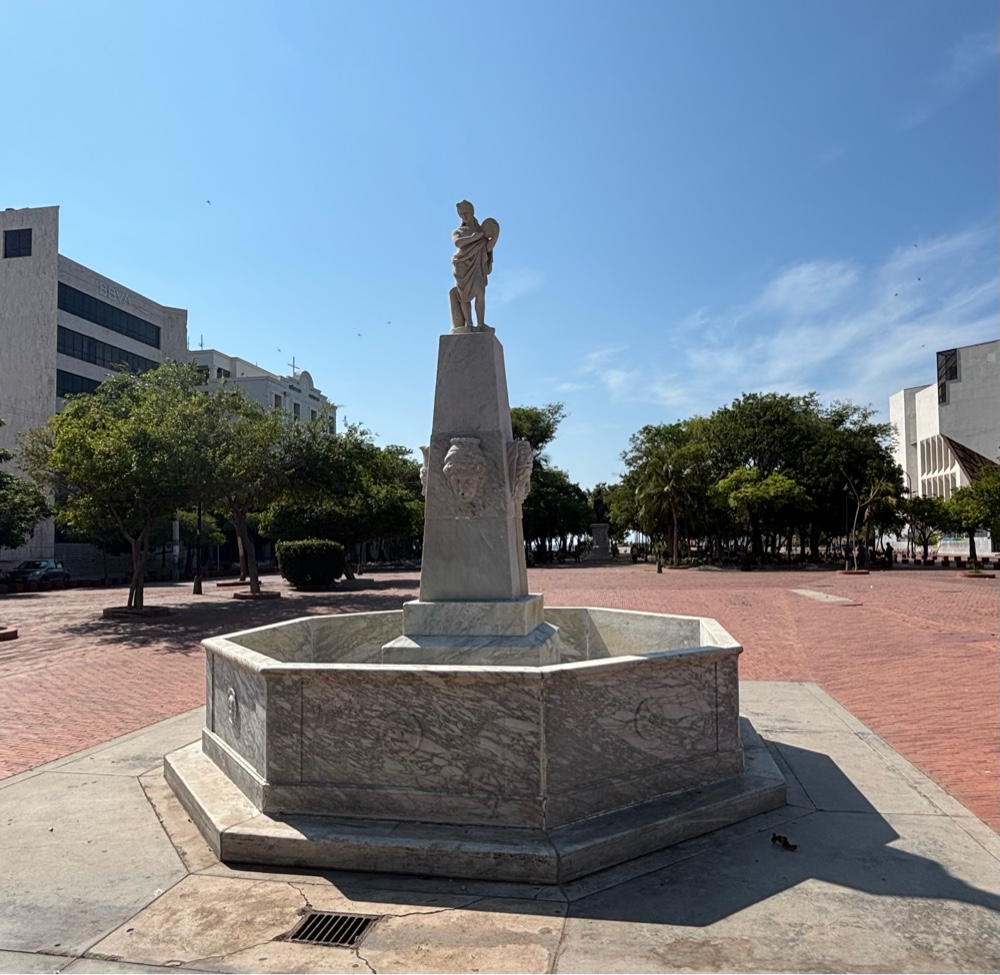 |
| Feuntes de la Cuatro Caras is a fountain in Plaza Bolivar. |
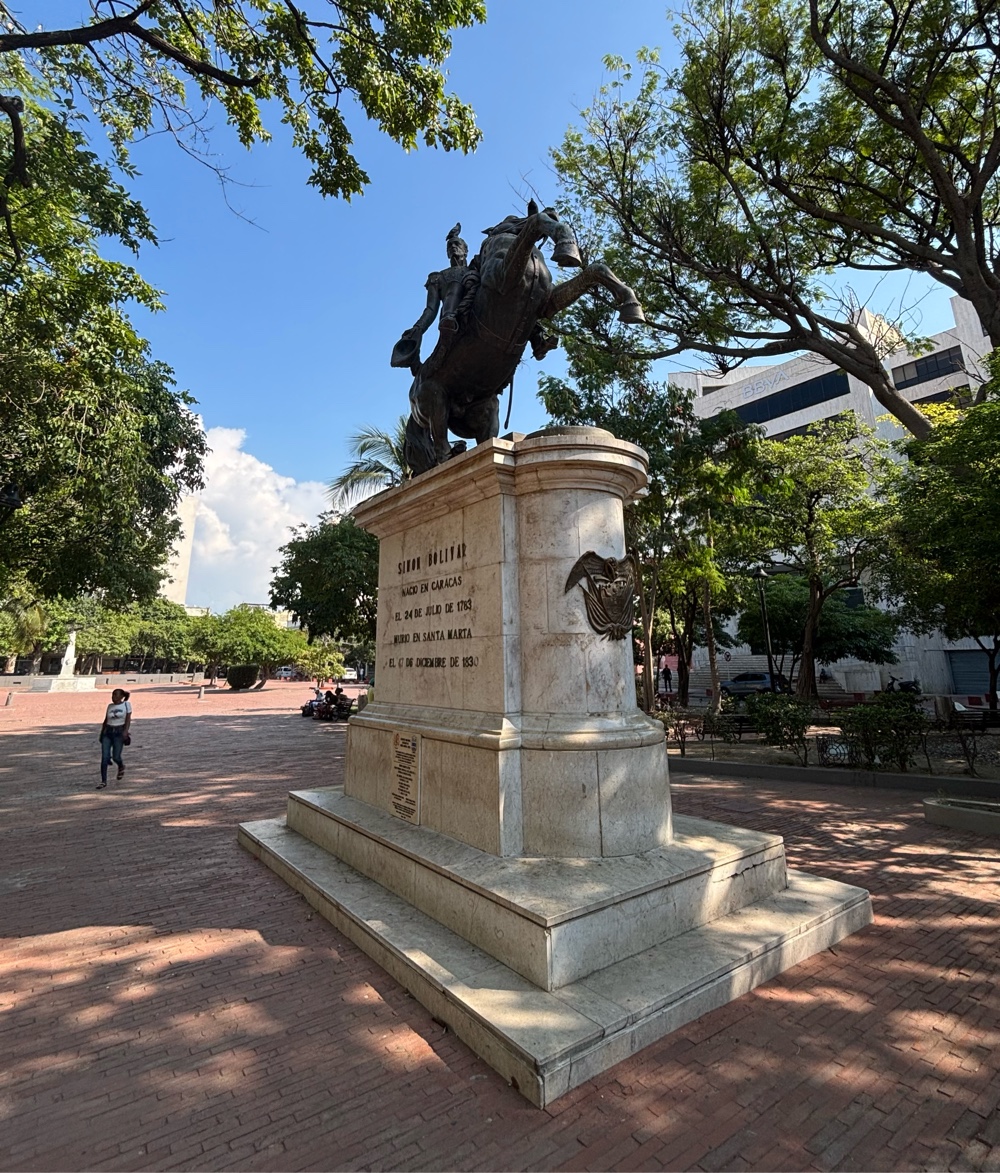 |
| Simon Bolivar is one of the most famous and celebrated military heroes in South America’s history, as he liberated much of the continent from Spanish rule. He died here in Santa Marta in December 1830, at age 47, of tuberculosis. |
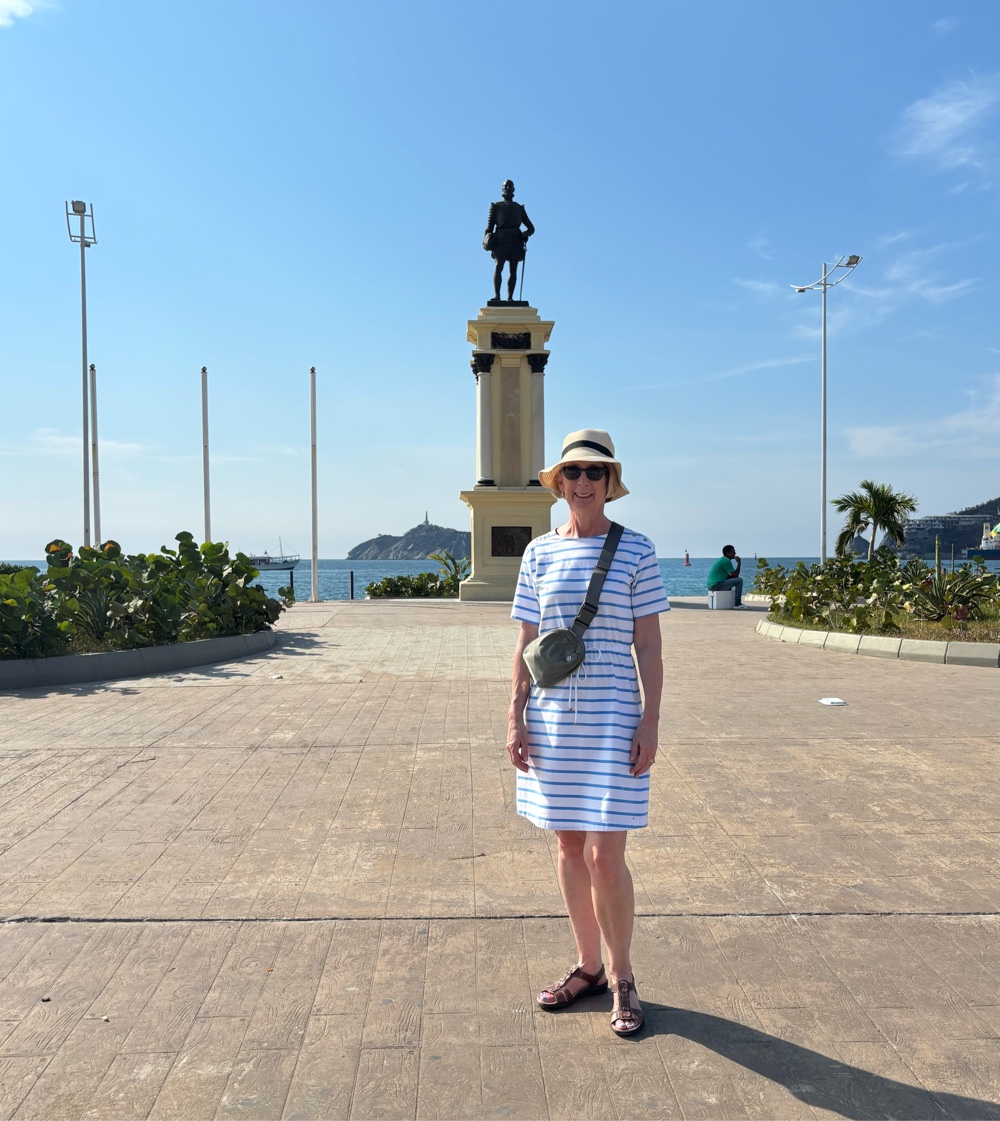 |
| Statue of Camelon Rodrigo de Bastidas on the Santa Marta waterfront. |
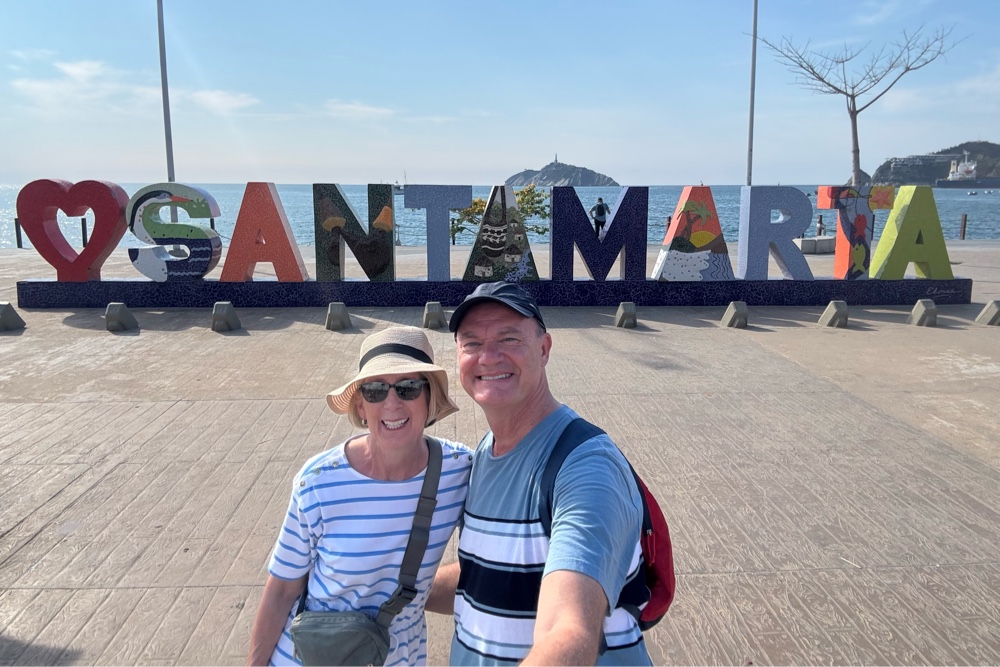 |
| Santa Marta has a nice pedestrian zone along the water’s edge in the port. |
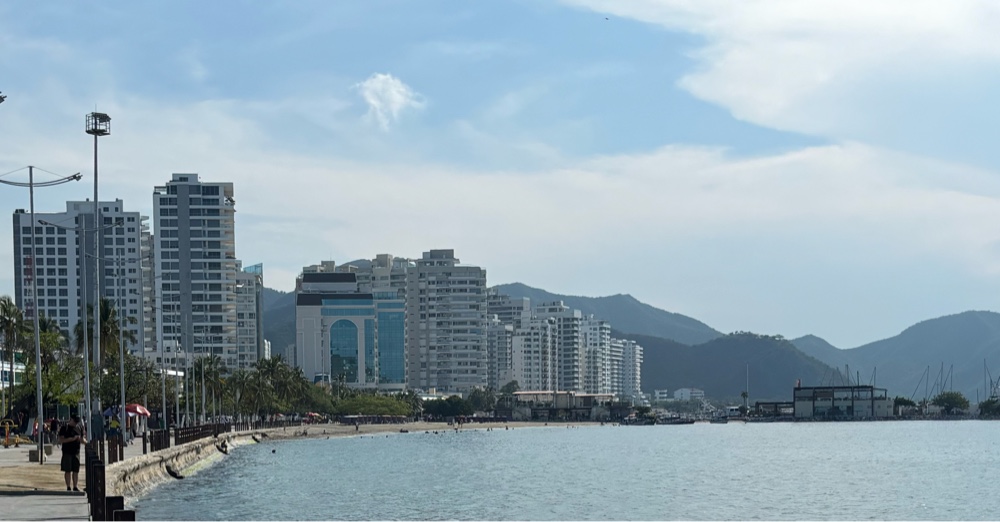 |
| The Santa Marta waterfront. |
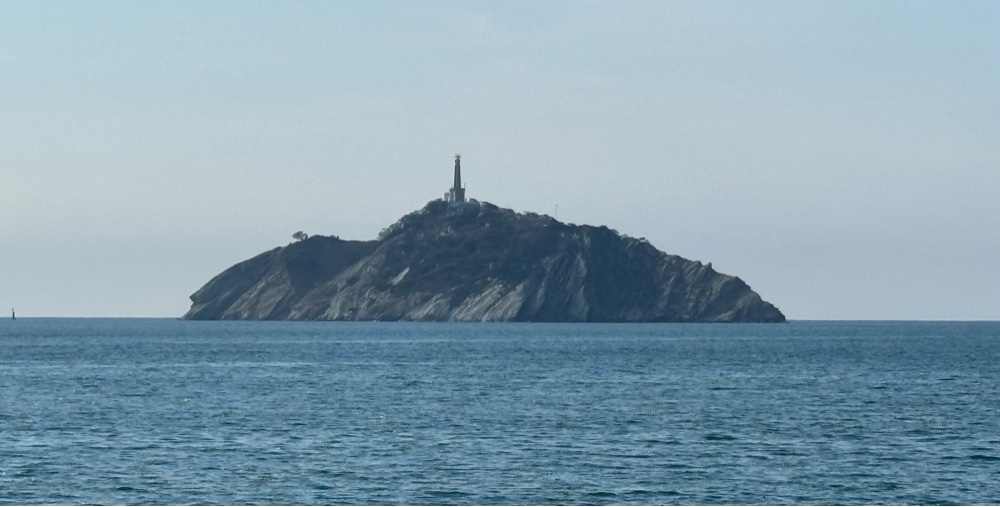 |
| El Morro de El Rodadero is an island just off the port of Santa Marta. It’s high cliffs make it difficult to access. It does contain a lighthouse and the ruins of a fortification. |
 |
| All those ships in yesterday‘s photo that were lined up waiting to enter the port, eventually find birth here, where the cargo is loaded. |
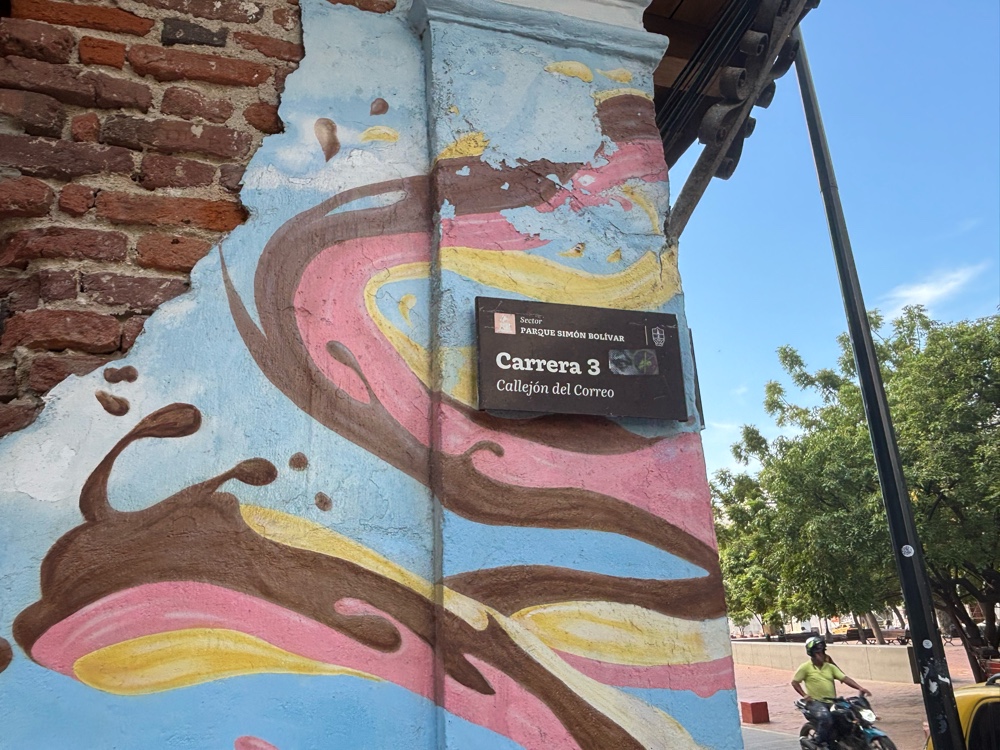 |
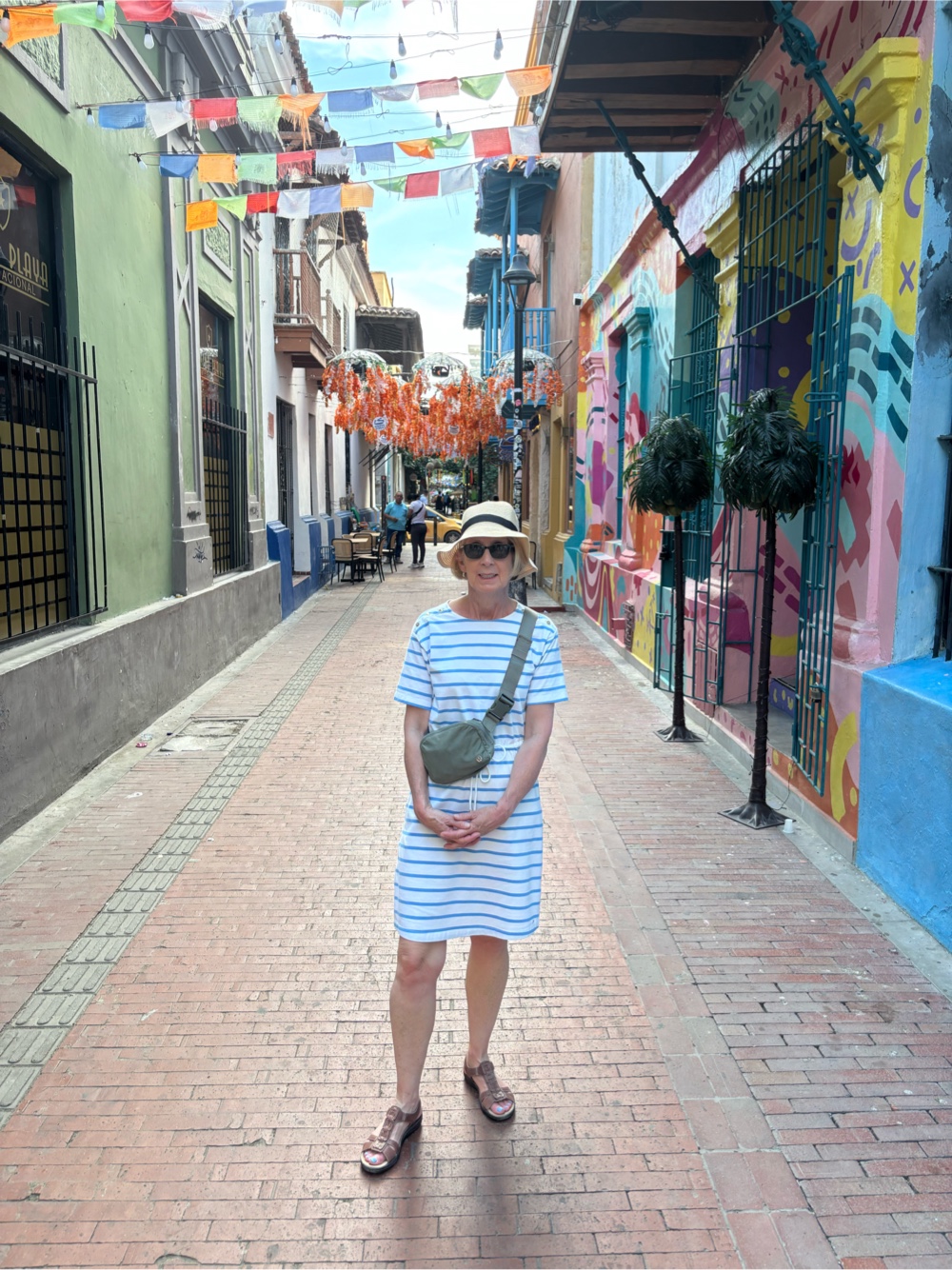
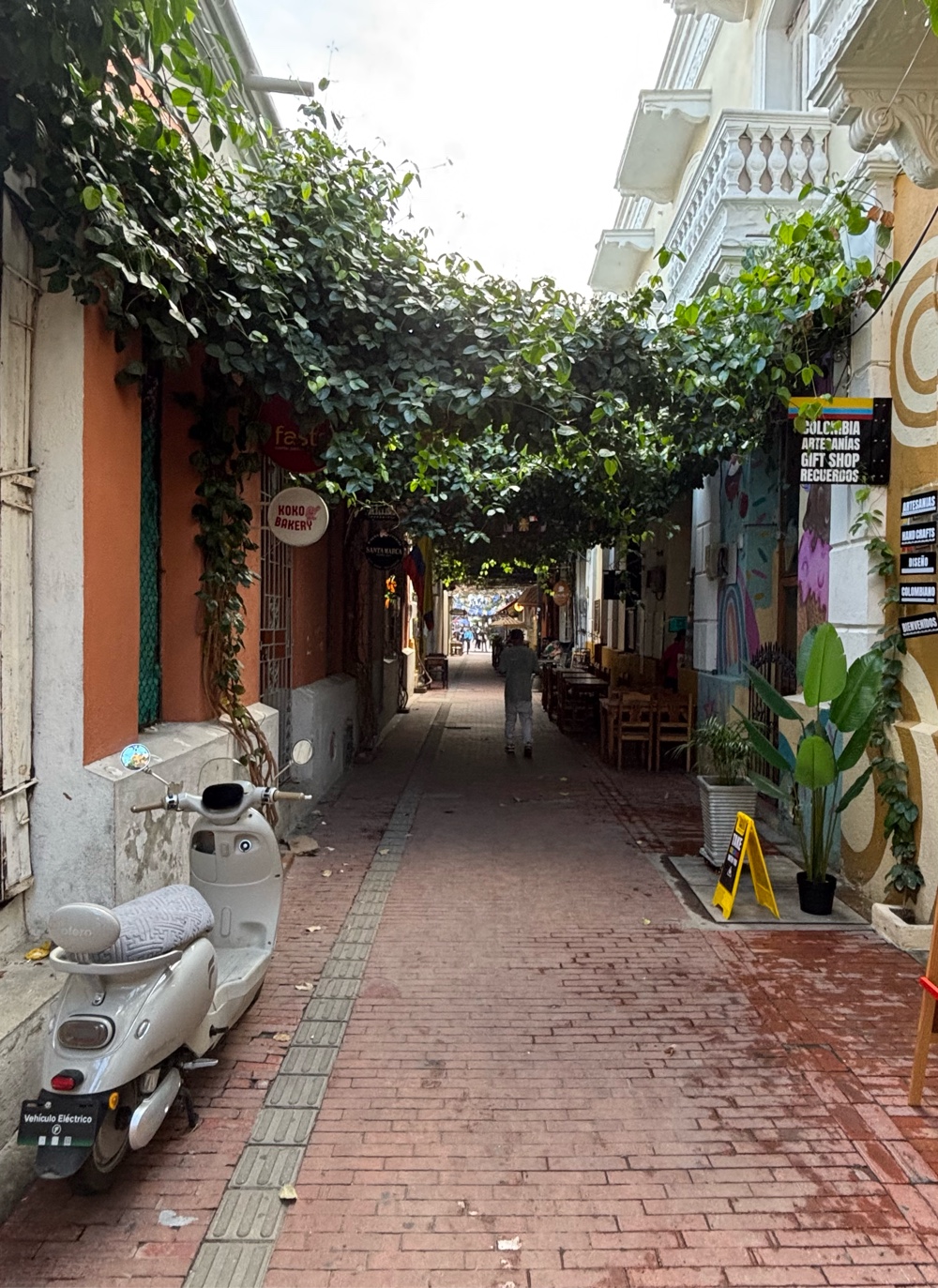
| Callejon del Correo is the cities pleasant pedestrian zone. It extends from the Customs House to Parque de los Novios, a pleasant park with a bandstand and statues. |
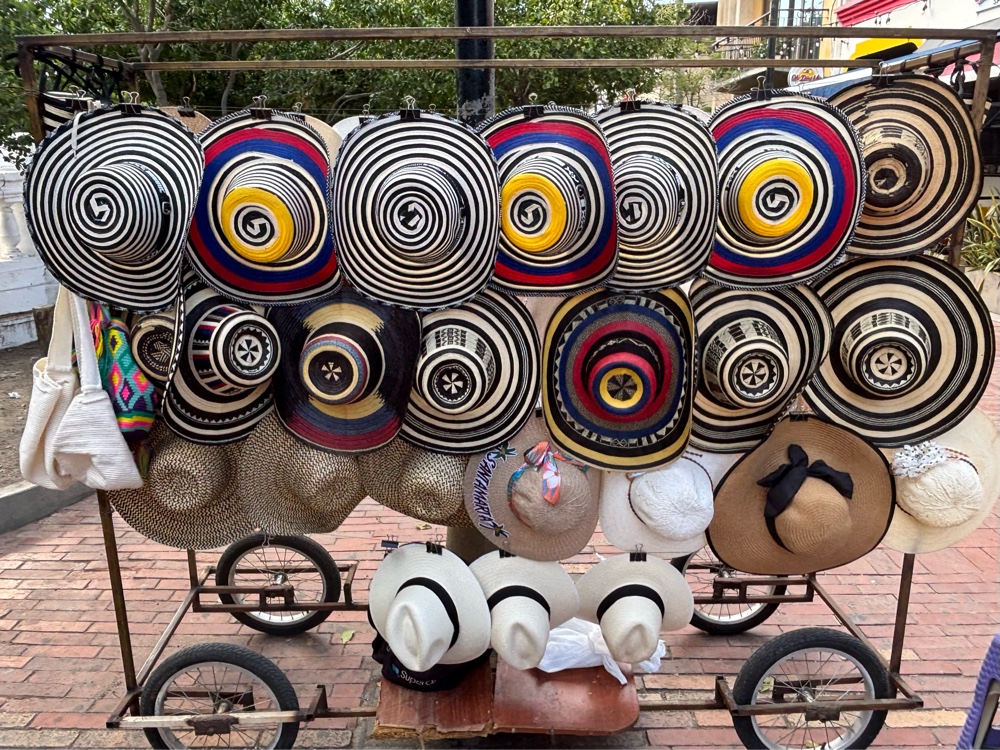 |
| Colombian sombreros. |
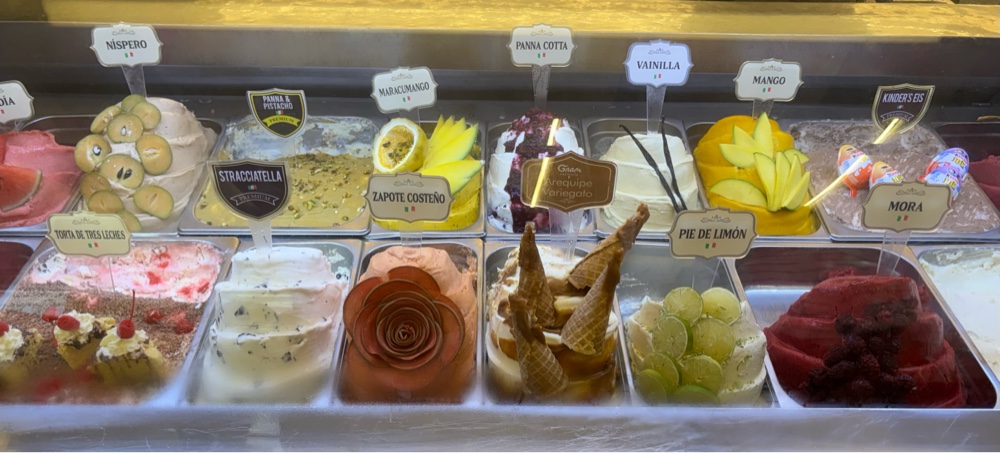 |
| One of two cases of tempting ice cream that we had to choose from. |
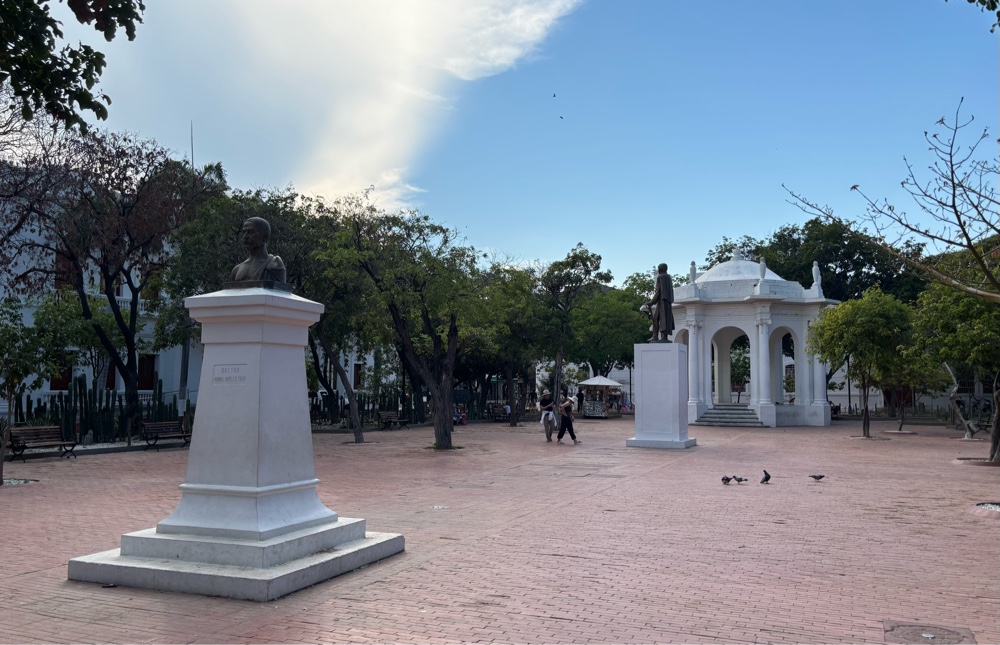 |
| Parque de los Novios is the pleasant end point in the pedestrian area. |
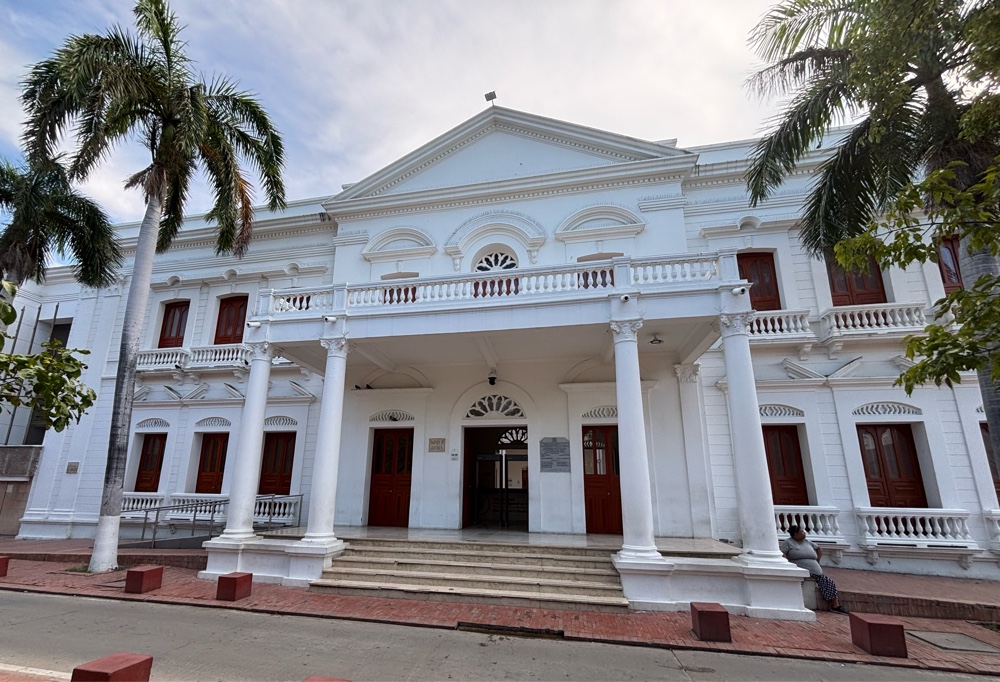 |
| The courthouse. |
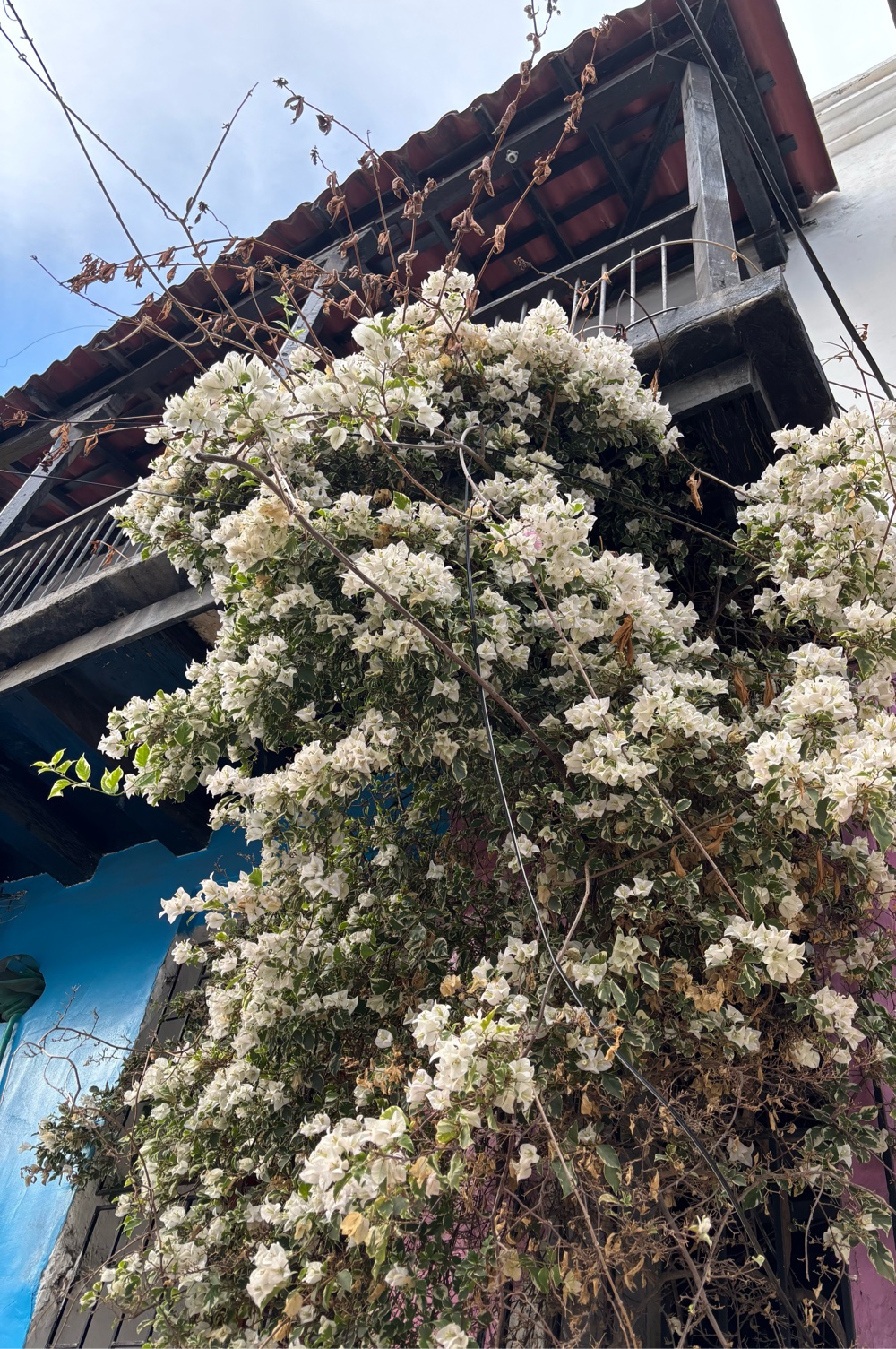 |
| Bougainvillaea and a traditional balcony on Calle 17. |
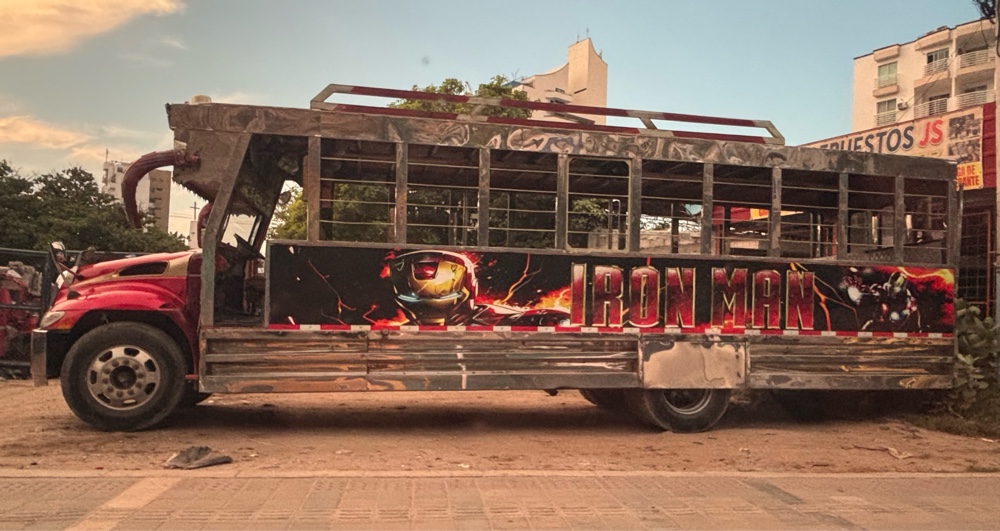 |
| Public buses really run the gammut here! This has to be one of the most unique buses we have ever seen. |
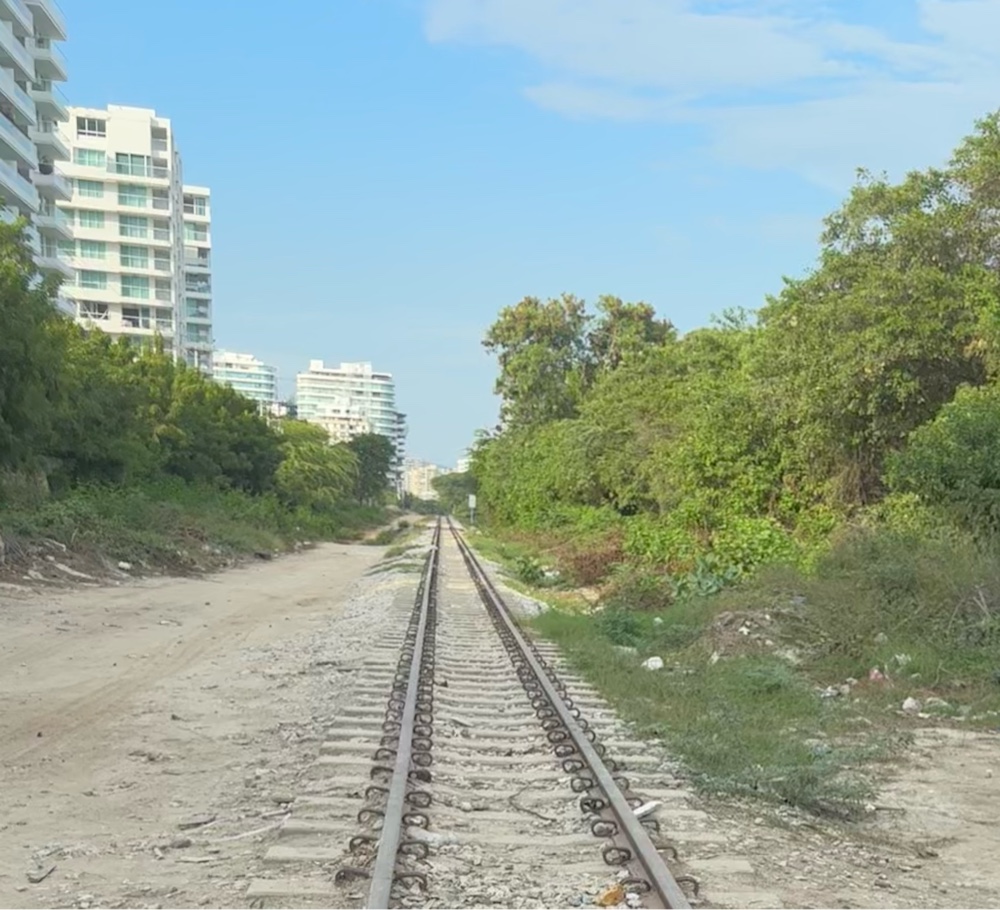 |
| There is a narrow gauge railway, which was used to transport bananas way back when. Today, it is used to transport coal from the open coal mines in the region. |
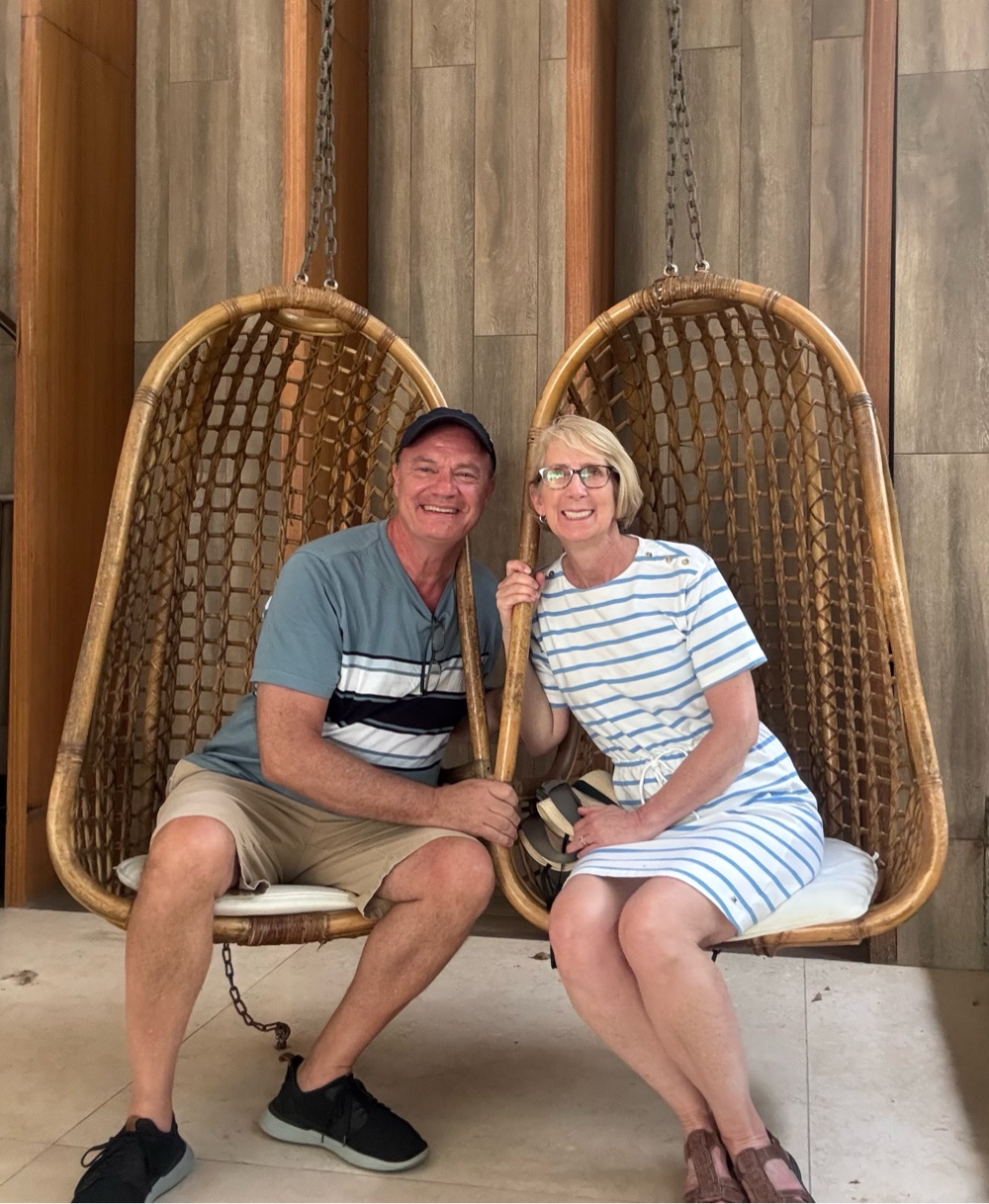 |
| Unbeknownst to us before arriving, the cartel and the police had a standoff here a couple of months ago. Things seem to calm down now. But all that to say, we were happy to be back safely at the hotel after our nice tour of Santa Marta. And at no point did we ever feel unsafe. |
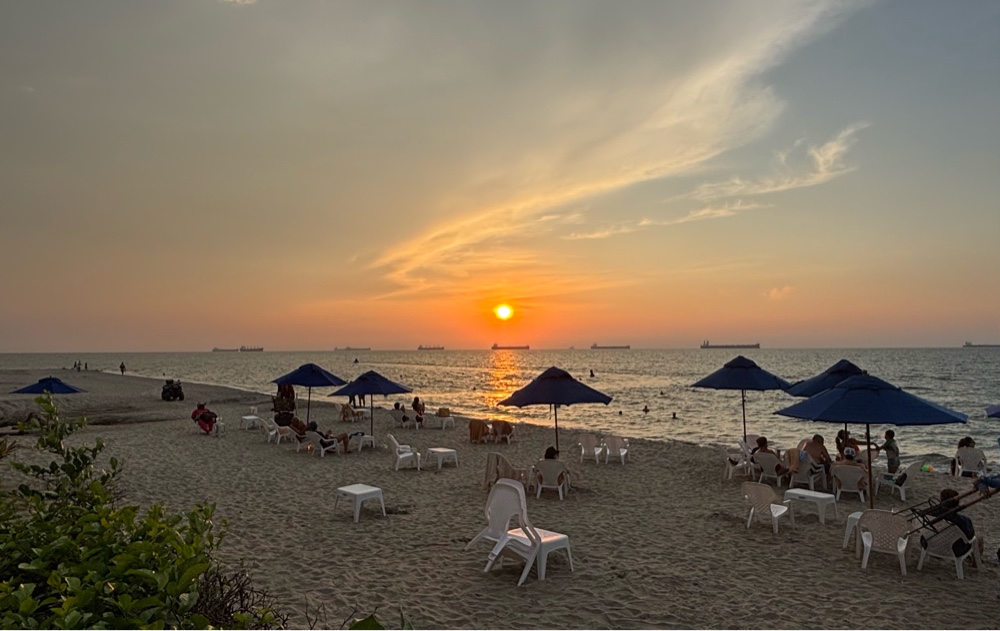 |
| As the hotel looks Westward over the Caribbean Sea, we enjoy a beautiful sunsets each evening. |
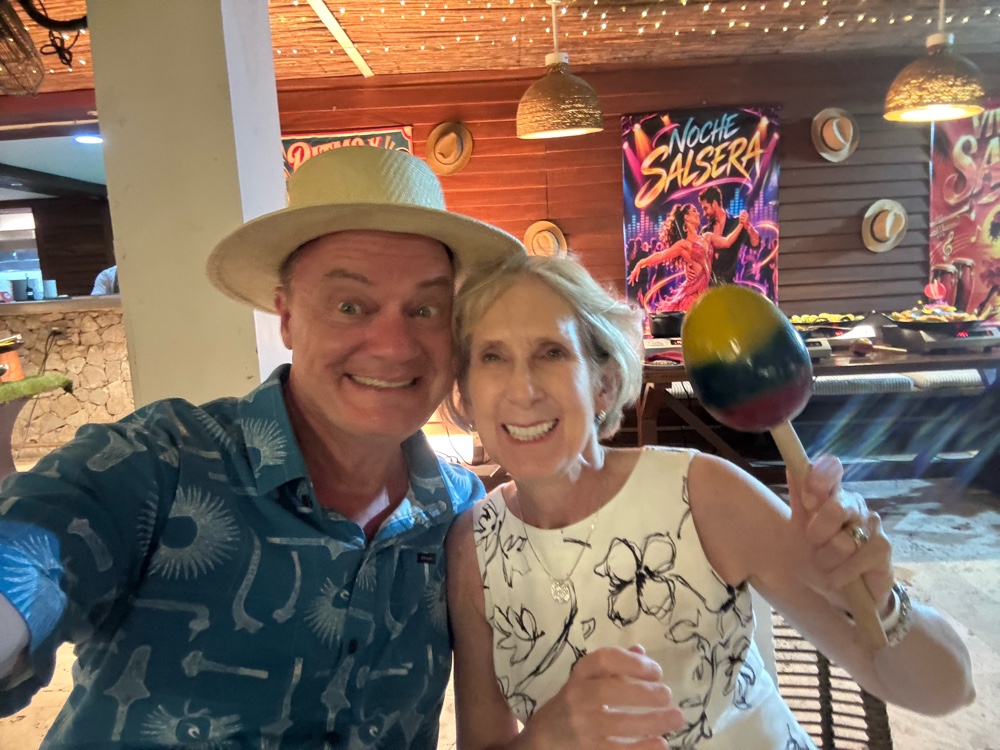 |
| Caribbean and salsa night at the Marriott! The live band didn’t show up, but, at least we had recorded salsa music to enjoy! |

Comments
Post a Comment